Daniel Šuljić about Animafest: my admiration for the past has never held me back

When I find myself face-to-face with Daniel Šuljić, I fear I’ve ended up in the wrong interview with the wrong man. The wall of guitars behind him suggests I’ve stumbled into an interview for Guitar Hero Magazine, and the man’s age doesn’t quite fit the concept of a farewell interview. And indeed, that’s not what this is! Šuljić is a director, lecturer, and animation expert, but after 16 years as artistic director, he is stepping down from the World Festival of Animated Film Animafest Zagreb, a festival he helped steer into the modern era.
In the 1960s, when the foundations for Animafest were laid, Zagreb had a vibrant animation film community. How close are you still to the spirit of those days?
Daniel Šuljić: It is still at the heart of the festival. In the 1950s, a group of artists started making films, almost out of the blue, without any prior knowledge or tradition to fall back on. They were very talented and achieved international acclaim. At the Cannes Festival in 1959, where some of their films became major international successes, film theorist Georges Sadoul dubbed them ‘the Zagreb School of Animation’. Figures like Dušan Vukotić, Vatroslav Mimica, Nedeljko Dragić, Bordo, Vladimir Kristl, and many others established Zagreb’s reputation in the 50s, 60s, and 70s. When the international animation association ASIFA was searching for a new festival location, Zagreb caught their attention. Animafest began in 1972 as a biannual event, alternating with the Annecy Animation Film Festival, until the late 90s, when they both became annual events. This makes Animafest the second-oldest animation festival in the world, after Annecy.
This Zagreb School of Animation was, first and foremost, a close-knit group, working together and probably drinking together as well.
Šuljić: It wasn’t a school in the literal sense; there was no institution. The term referred to a style and to a generation that learned by doing. They all worked for the same studio, the city-owned company Zagreb Film, which still produces films today. They were something like an artistic family, supporting, inspiring, and competing with one another. Their idea was to create a festival by filmmakers, for filmmakers. People like Bordo, to this day, still emphasise: this is a festival where people from all over the world come to show each other their work. ‘By filmmakers for filmmakers’ is still the festival’s core principle. It’s not so much about the industry or big productions; the focus remains on the art and the artists.
You refer to them as “our great family”.
Šuljić: The School’s sense of community remains essential to us. People who attend the festival usually have a wonderful time. I remember artists like Bob Godfrey – he was already there when I was a student, and he came back every year, with or without a film.
What made Animafest so special?
Šuljić: At the time, Zagreb occupied a unique position. Yugoslavia was one of the Non-Aligned countries. It wasn’t part of the Soviet bloc; we had our own form of communism. That made Zagreb one of the few places where artists from both the American and Soviet sides could meet. From across the Eastern Bloc, it was easy to travel to Yugoslavia, which made us a bridge between Western and Eastern animation. Zagreb was even one of the first places where people could meet colleagues from China.

This shows how important Croatian animation was to the festival. But to turn it around: how important was Animafest for the development of Croatian animation?
Šuljić: Extremely important, not just for Croatia, but for the whole of Eastern Europe, who came here in the 1970s and 80s to connect with the international scene. In the 80s, the careers of the old masters began to decline, and the economic crisis took its toll. The whole scene weakened, and then, in the 1990s, the war broke out. Although we were barely able to produce films during those difficult years, the festival continued, maintaining connections with the international scene and keeping the spirit of artistic animation alive.
To be honest, I had completely overlooked the impact of the war. Across Eastern Europe, we see a decline from 1989 onwards, when state-run studios closed their doors, but in Yugoslavia, this was immediately followed by a tragedy.
Šuljić: During those years, I was studying animation in Vienna. I remember that some of my friends were already working at Zagreb Film, but when the war came, there were no jobs for animators, and certainly no funding for artistic animation. To survive, some of them made propaganda films. The quality was still there, but it could no longer find an outlet.
Looking at Eastern Europe as a whole, there was a clear post-crisis recovery. Croatia was part of that resurgence as well.
Šuljić: The festival played an important role in that. The international filmmakers who kept coming to Zagreb inspired a generation of young filmmakers like me, Simon Bogojević Narath, and Marko Meštrović. Simon, together with Vanja Andrijević, went on to found a production company, now known as Bonobo Studio. Other companies followed, and Zagreb Film remained active, so by the early 2000s, an entirely new creative scene had emerged.
In many countries, it also had to do with self-confidence. It wasn’t easy to step out of the shadow of the great masters of the past.
Šuljić: I actually see it the other way around. The major successes of earlier generations and the reputation of the Zagreb School gave us, the younger generation, the confidence we needed. We felt we had nothing to lose. Others had gone before us, and their achievements convinced us that we could do the same. My admiration for the past has never held me back; it has inspired and motivated me. I was young and thought: if they could do it, I can do it too. I’m sure many filmmakers of my generation felt the same.
What is the Zagreb audience like? I imagine it’s a special one.
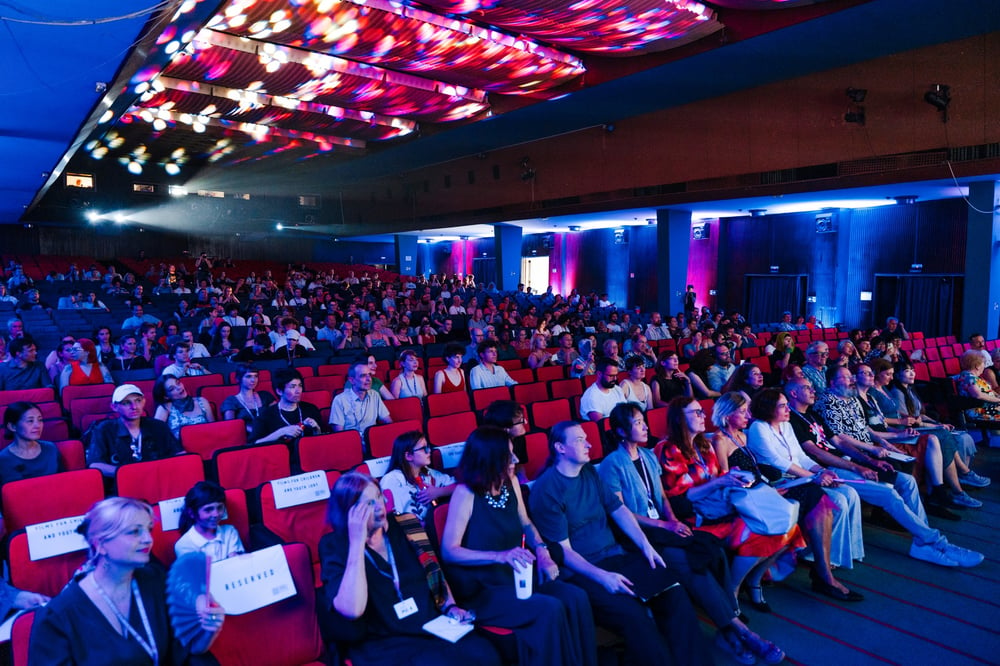
Šuljić: Yes, we like to think so. They’re well-informed, with a shared knowledge of animation. That said, we still have to push back against the idea that animation is just for children, a misconception we’ll never shake off. A couple of years ago, we did a photo shoot with the main character of the Oscar-winning short SUROGAT by Dušan Vukotić, from which we made a life-size promo puppet. While posing with this 1,5-metre-tall mascot in front of a kebab shop, I noticed two guys walking by. One of them said, “Look, that’s a character from the Oscar-winning short.” For me, that was a sign that our work is paying off.
How has Daniel Suljic left his mark on Animafest?
Šuljić: I grew up knowing there was a festival in my city, and at some point, as a teenager, I decided to check it out. I don’t remember exactly what drew me in, but from then on, I spent hours there every year watching films. Later, I started making films myself, and some of them were selected for the competition. For a filmmaker, that’s the most rewarding festival experience; you really feel part of a festival’s reason for being. When a position opened up at Animafest, someone suggested I apply, which hadn’t occurred to me before. In the meantime, after four terms and 16 years, I’m proud to be the longest-serving artistic director in the festival’s history. Together with Hulahop, the organising team, I try to keep the fire burning. The ‘by filmmakers for filmmakers’ logline has guided me as artistic director when making decisions about the programme, the festival identity, the venues,… It’s still about bringing filmmakers together with an enthusiastic audience to celebrate the art of animation.
You make it sound as though you simply carried on the work of your predecessors, even though you’ve introduced quite a few innovations to the programme.
Šuljić: Animation has this… let’s call it a problem: it’s a bit of everything. I always thought of animation primarily as fine art, but technically it’s film. It’s also a visual art, yet within the art scene, it’s not generally accepted in the same way as painting or graphic art. It’s not theatre either, but many puppet films are almost like opera. It overlaps with pretty much all of these categories, and that’s what makes it so beautiful. One way of bringing all these elements together was by organising a series of “behind the scenes” exhibitions. I invited filmmakers whose films were in competition to submit original sketches, storyboards, models, … Audiences could watch the film in the cinema and then visit the gallery to see the source material. The festival team organised and staged those exhibitions excellently.
In general, animation people tend to be modest, but after 16 years, you have earned the right to praise your work, even if that feels uncomfortable.
Šuljić: I’m not that kind of person. Some people appreciate my work; others might dislike it or mock it. It’s not my private festival; there’s a whole team behind it. I always strived to represent the full spectrum of what’s happening in animation today. You can’t please everyone, but I’d say that 90% of the people who have visited the festival are keen to come back. Yes, that’s pârtly my achievement, but the festival council and the entire organising team can take pride in it. From the main producers to the “last” volunteer, many people contributed with full heart and passion. Whether you’re a footballer, a musician, or an artistic director, there will always be people who think they will be a better footballer, musician, or artistic director than you. And sure, there’s always a faster gunslinger waiting around the corner.
What would be your second option, footballer or musician?
Šuljić: I don’t need another option; I am both an animator and a musician. Depending on the idea, I choose the medium. Some things are better expressed through music and words, while others work better as film.
Can you recall two moments that stand out as festival highlights, when you looked around and thought: this is why I’m doing it?
Šuljić: There are so many moments like that, which is why I feel so privileged in my position. I can select films for thematic or archive programmes, which means I get to screen some of my favourite titles. Putting those programmes together has always been one of the most enjoyable parts of the job. And I’m proud that I managed to bring William Kentridge to Zagreb. I initially tried to reach him through my South African contacts and his gallery in New York, but without success. Finally, I was able to meet him in Venice, where I travelled with Margit Antauer Buba to attend a lecture he was giving, and to seize the opportunity to invite him. A great artist and a brilliant mind, but also a nice, friendly person. He came to Zagreb for three days, received a Lifetime Achievement Award, and was super accessible to everyone, watching films in the cinema with the audience, and talking with filmmakers afterwards.
If we want to define the key drivers for a country’s animation industry, there are certainly two: education and support from the national film fund.
Šuljić: In the past, film subsidies were administered by the Ministry of Culture, but the Croatian Audiovisual Centre (HAVC) was later established as an independent organisation operating with public funds – taxpayers’ money. They do a good job, covering all cinematic elements in Croatia, from production to festivals and workshops, to education, promotion, coproductions, and so on. Of course, there are complaints: there is a dedicated call for animation, but budgets could be higher (compared to other European countries), and wages are too low for highly skilled workers in a labour-intensive sector. All of that is true. But in many countries, such as the US, there isn’t anything like this, no grants for animation whatsoever. In that sense, we in Europe are among the lucky ones.
The second factor is schools, such as the Animation Department at the Academy of Fine Arts in Zagreb, where you also teach.
Šuljić: The Animation Department had a slow start in 1999, mainly due to a lack of equipment and facilities. Over the past 15 years, however, there has been steady growth and increasing professionalism. Next year, we will finally have the proper space and equipment for students to learn and develop as animators. Each year we have more graduating students, and some of them continue working in artistic animation.
If you could look inside your students’ heads, what expectations would you find there?
Šuljić: If I judge by what they bring to the entrance exam… About 50% bring manga and anime, which are very popular among students. Another 25% bring some gothic fantasy stuff, and 20% have more personal style. The development of AI remains uncharted territory, and that certainly is a cause for concern for them. Changes are coming, that much is certain, but nobody knows exactly what they will look like. Many of our students still want to become animators; others aim for comics or illustration. With their enthusiasm, work ethic, reliability, and skills, it will ultimately be up to them to determine where they end up.
What is your role as a teacher?
Šuljić: We help them develop their skills and artistic potential. All we can do is put them to work. We do everything we can for them, and often even a little more. Sometimes they notice it, sometimes they don’t, but that’s all natural. Whether they succeed in the end depends on them and on the industry. The more the Croatian animation industry grows, the more opportunities there will be.
After all those years, the talent pool in Croatia must have grown huge!
Šuljić: Talent is not enough, as we know. Nowadays, if you are skilled and reliable, people will hire you anywhere in the world. It depends on your abilities, your ambitions, and your portfolio. You are no longer dependent on the national industry; you can go to any city or country in the European Union, or beyond. The world has become a small place for nomadic creatives.
Gert Hermans
On behalf of CEE Animation