Lucia Chuťková: I still feel like I have a lot to learn, but I feel much more at ease
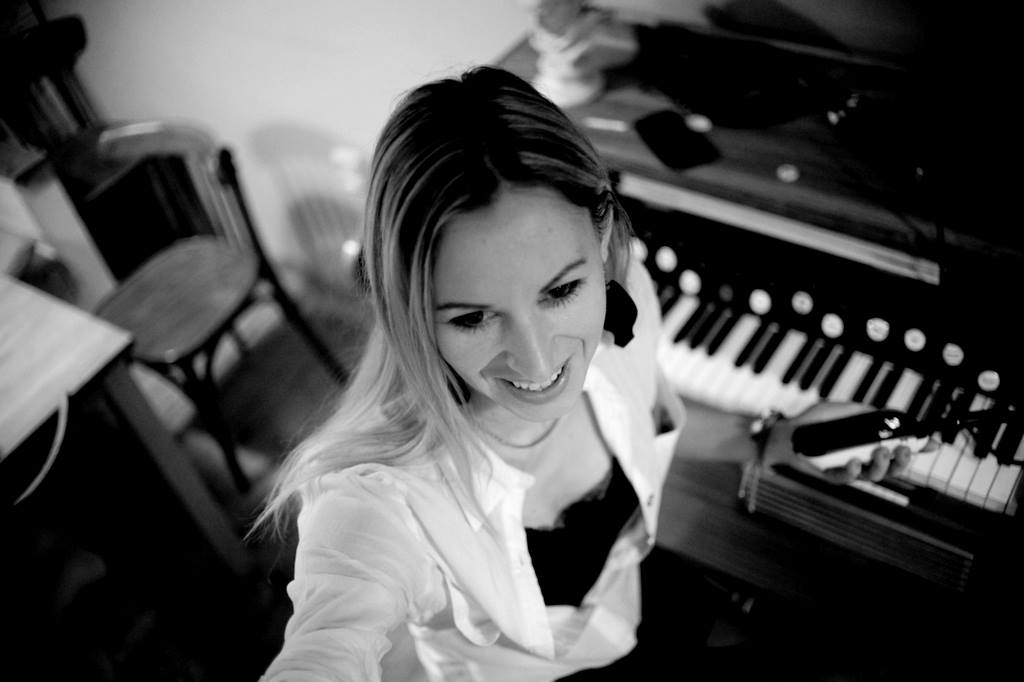
Music is woven into her DNA – something that stays with her throughout her life, even when she tries to step away from it. Some might call it a professional affliction. For Slovak composer Lucia Chuťková, though, music is simply part of everyday reality.
In this interview, she talks about her journey from classical composition to animated film, the films and composers that inspire her, and the projects she’s currently working on.
What are you currently working on?
I recently recorded music for a live-action documentary directed by Filip Remunda. The main characters are Blanka Kulová and her father, photographer Vlastimil Kula. The film explores their relationship, but also offers a glimpse into the life of a photographer.
I assume you’re working on several projects at once these days?
Yes, that’s usually how it goes. Projects tend to overlap, and sometimes they even share the same deadline, which isn’t exactly ideal. (laughs)
At the moment, I’m continuing a long-term collaboration on the animated series Forest Five . And I’m also about to start working on a theatre production called Magor’s Fairy Tales for a puppet theatre in Brno.
Which part of the creative process do you enjoy the most?
There are many stages in the process, and some are definitely less enjoyable. (laughs)
My favorite moment is when I see the music I’ve created together with the image for the first time and feel that everything just clicks.
The second best moment is after the recording, or during the mixing. And I always look forward to recording live instruments.
If we go back to the very beginning, how did music enter your life?
We’d have to go all the way back to my childhood, when my parents enrolled me in music school to learn piano. My enthusiasm faded a bit when I had to practice difficult études, but then I found a new kind of excitement when my sister and I started composing our own pieces.
That’s what kept me going. Later I added percussion and clarinet, and eventually it all led me to the conservatory. That was a time when I really enjoyed it.
At the same time, I didn’t know anyone in my surroundings who made a living as a classical music composer, so I kept thinking about what my future could look like.
But those possibilities started to appear over time?
Yes. At school we had seminars on stage music, and that’s where I connected with students from the theatre faculty. I started working with them on my first theatre productions.
One of those collaborations was with Júlia Rázusová, and we’ve continued working together over the years, even now. This connection actually came through Ľubica Čekovská, who taught me stage composition.
So your first real professional experience came from theatre?
Actually, no. Already at the conservatory, I composed music for my sister Ivana’s first animated film. That was my very first practical experience, and also my first encounter with animation.
How was that first experience different from what you do today?
Today, when I start working on a film, whether animated or live-action, there’s usually a conversation with the director first. I get to understand their ideas and expectations.
With my sister, it was much more intuitive. We’re very close, we even played in a band together, so we already understood each other’s thinking. Long discussions weren’t necessary. I just knew what the film needed.
After school, you focused mainly on theatre. How did film come back into your life?
Through Katarína Kerekešová, who invited me to collaborate on her animated series The Websters. I actually owe that connection to my sister, who works as an animator in Katka’s team. The collaboration clicked immediately, I think on both sides. Katka is an amazing person, and I’m very grateful for that connection. After The Websters, I also worked on two 30-minute Mimi & Líza TV specials. That was another new experience, especially because they used orchestral music.
And then Peter Kerekes brought you into his projects as well.
Yes, and that was a completely different world. The first film we worked on together was 107 Mothers, and later also Wishing on a Star.
Do you see a difference in composing for animation versus live-action?
There probably is, but nothing specific comes to mind right now. (laughs) I tend to notice more variation from director to director – their artistic vision and the overall concept of how music is used in each project – than between the two mediums themselves.
Even within children’s animation, does each project feel like a new experience? For instance, how would you compare some of your recent work, such as The Websters and Tales from the Magic Garden?
Definitely. Each time you’re searching for a new musical language, and each director has a different vision.
Some directors have very specific ideas about the music and the emotions they want to achieve. Others give me more freedom and only respond later, once I send them something.
Tales from the Magic Garden was especially challenging because it involved four directors, each with a slightly different perspective. My task was to bring it all together into one cohesive whole.
You mentioned earlier that during your studies it was hard to imagine making a living as a composer. When did that change? When did you start to feel that you could actually earn a living doing what you love?
Much later. It wasn’t like I left school and immediately went freelance. I just kept moving forward, following opportunities, without overthinking whether it was “the right path.”
The offers kept coming, I enjoyed the work, so I continued. At the same time, I was also teaching. Gradually, I transitioned to working independently and left teaching behind.
I never expected to end up in film. It could easily have not happened. A lot of it comes down to chance, and I’m grateful for where it brought me.
When did you start feeling confident in what you do?
It’s probably just my nature, but I still feel like I have a lot to learn.
Even when I think I know exactly how to approach something, that feeling fades quickly, because I keep encountering new challenges and ideas I need to work through. This kind of work is definitely not repetitive or formulaic.
What would you recommend to those who dream of having a job like yours?
First of all, film music isn’t really something you can formally study in Slovakia at the moment. We had just one seminar, and even that was more or less a lucky coincidence – a doctoral student specializing in the field happened to teach it at the time.
It’s also quite difficult to break into the industry. I can hardly imagine what it’s like for a young composer just starting out today. Even if you’re determined to pursue it, it’s not easy to know where to begin without real experience or professional connections. If film music were offered as a proper study program, it would definitely make things much easier.
And yet, it worked out for you.
Yes, but I really see it as a series of coincidences. I did think about working on animated films and film in general, but at the time I didn’t fully understand what it involved.
At the same time, I was studying classical composition, where I sometimes felt a certain rigidity. People come to a concert and experience it individually, which can feel a bit distant or sterile.
What I loved about theatre and film was the freedom, the energy, the collaboration. The moment I experienced that, I was completely drawn in.
Now, though, when I think of classical composition, I feel like some of the constraints I once perceived are no longer there. I enjoy moving between different projects, switching styles, blending approaches. I feel much more at ease.
Which animated films or music inspire you?
I really loved Alexandre Desplat’s score for Wes Anderson’s Isle of Dogs. I also enjoy Alfred Schnittke, Jonny Greenwood from Radiohead, and composers like Nino Rota.
Do you separate your work and personal life, or do they tend to overlap?
Definitely the latter. And I have to say, it’s not always easy to balance that with family life.
I try to consciously set aside at least one day a week to step away, but I’m naturally drawn back to work. Still, there are times when I do manage to switch off.
And how do you switch off?
Most often, I go for a walk in the forest with my dog. It’s close to home, and that’s my way of resetting.
Does the music in your head switch off when you’re there?
It’s still there… but I try to stay present through my other senses as well. (laughs)
Thank you for the interview.
Andrea Gažová