Clay Is Freedom – But Dust Is Its Kryptonite
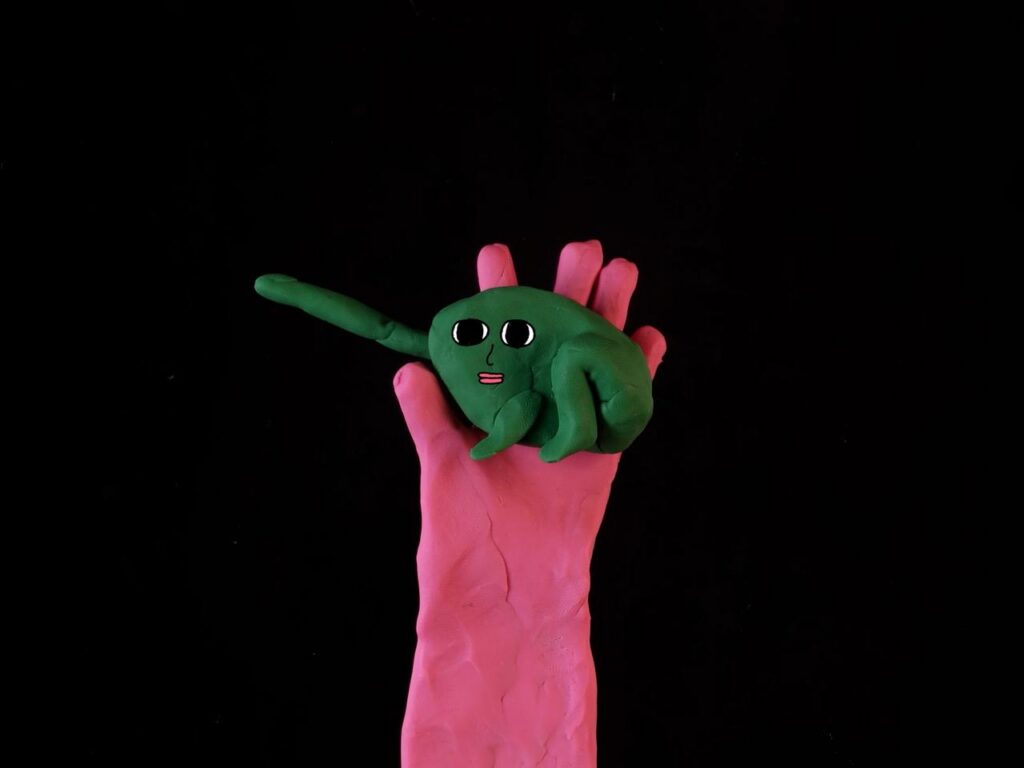
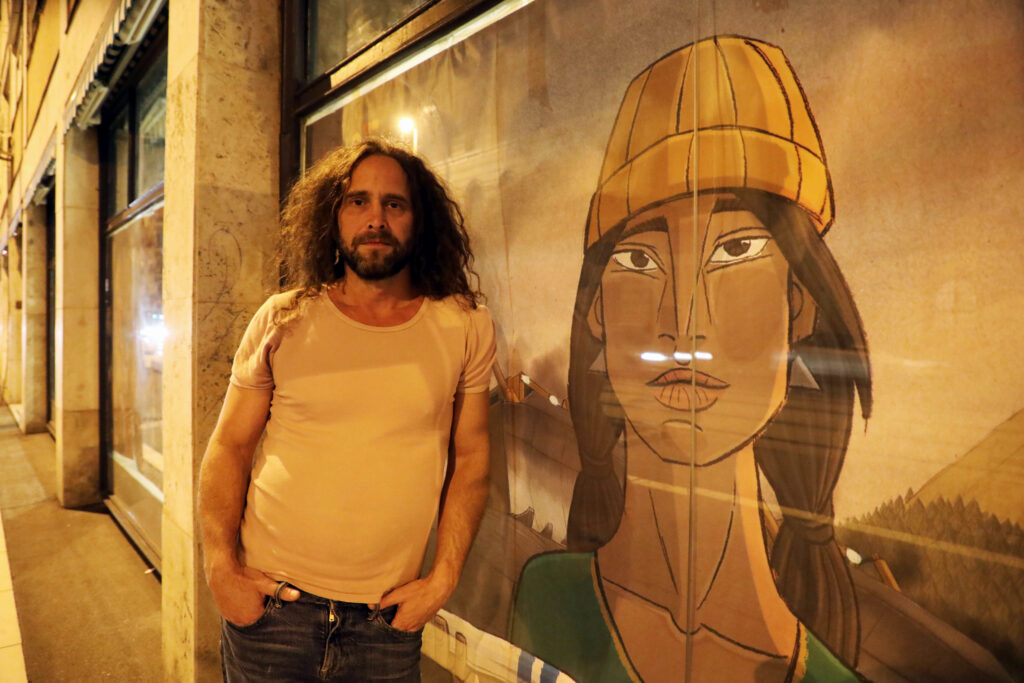
The widespread image of clay animation is often mistakenly associated with animation aimed solely at children, excessive colorfulness, or an exaggerated cuteness that sometimes borders on kitsch. This was also the case for clay animator Eliška Oz in her early days: “I was never really interested in clay animation. I associated it with something simple and childish, which I perceived negatively at the time. I always liked rough textures and ‘dirty’ art. So, it was my husband Lee who introduced me to clay, at a time when I needed to pull myself out of the darkness.”
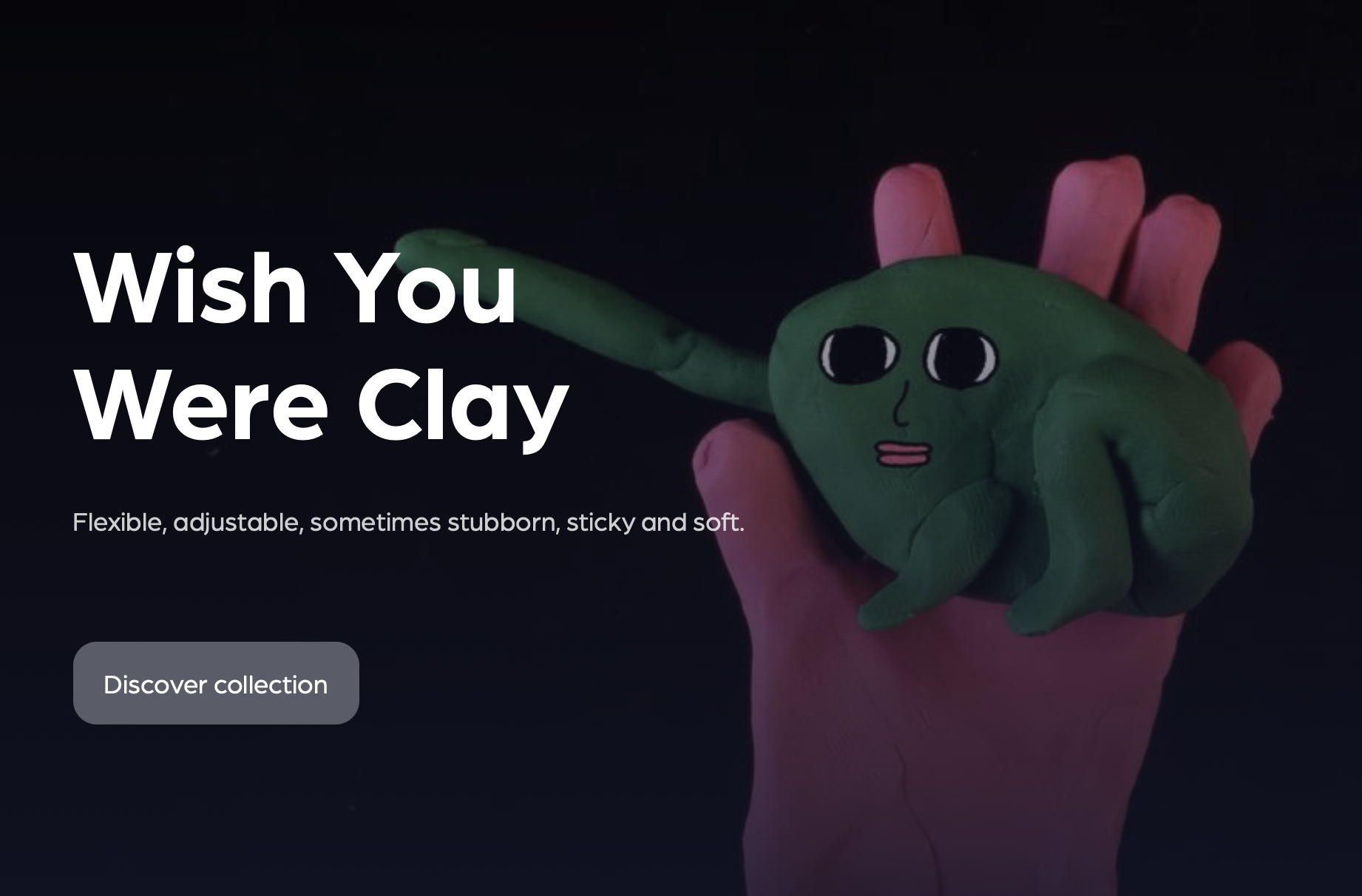
Yet, as with every animation technique, there is no single visual type of puppet, no single visual style, no single version of clay animation. The curated collection Wish You Were Clay beautifully showcases the diversity, potential and evolution of clay animation in recent animated film history. With a little help of three contemporary authors (Julie Černá, as well as the creative and marital duo Eliška and Lee Oz a.k.a. Oz Animation) whom I interviewed for this article, I attempt to cover the specificity, and above all, the great fun, of creating new animated worlds with artist’s fingers slightly sticky and faintly smelling of clay.
“Keeping plasticine clean for as long as possible… I hate it when colours get mixed and leave little crumbs from other shades. You must always cover the plasticine properly so that dust doesn’t settle on it, which can be annoying,” Julie Černá answered honestly when I pressed her to name the biggest challenges of working with clay. “Personally, I also hate the smell of plasticine, and the greasy film it always leaves on my hands.”

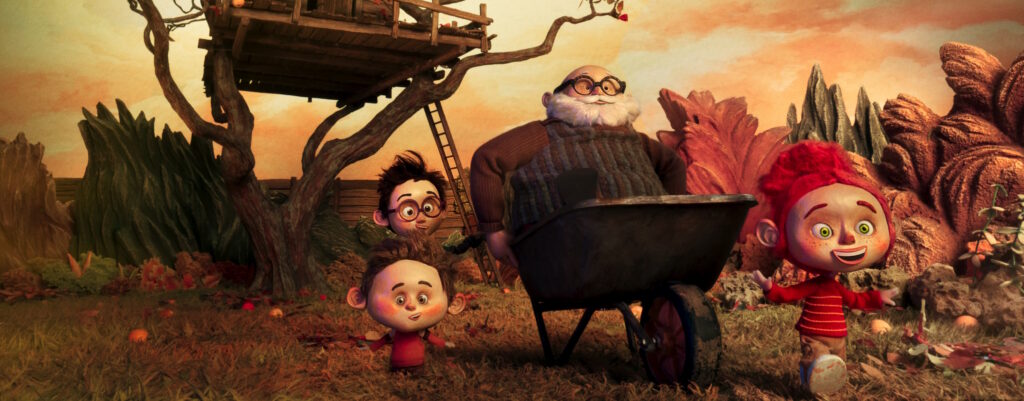
The older films in the collection – Uncle (1996) by Australian Oscar-winning artist Adam Elliot and the Creature Comforts episodes “Feeding Time” (2003) from the first season of the cult British series created by Nick Park – use more traditional clay puppets closely aligned with traditional puppetry norms and style. What sticks out (pun not intended) in both cases, however, is the underlying darkness and seriousness hidden behind all the funny looking, gesturing and
behaving cute little characters. In Elliot’s film Uncle, the protagonist’s wife drinks “aunt’s poison” and he later dies in a care facility with both legs stuck in one trouser. Yet this black humor serves to tell a deeply moving story about loneliness and a life slipping away too quickly. Similarly, “Feeding Time” is built on real life interviews conducted partly with immigrants living in the UK. They talk about British food but also, between the lines, they reveal how difficult it is to leave one’s home behind – along with childhood memories that extend far beyond taste.
These films demonstrate how clay animation can be a powerful ally for tackling serious topics without being preachy or heavy-handed. Following in this tradition is My Strange Older Brother (2018) by Polish director Julia Orlik, which – helped along by a bizarre banana costume – narrates a deeply emotional story about the complicated relationship between two adult siblings.
In contrast to these earlier works, the most recent films by Eliška and Lee Oz Wildbait and Julie Černá Pařezy (both made in 2025) use clay primarily as a gateway to creative freedom and experimentation. “What we enjoy most about clay is the freedom which it offers. We are not tied to a single artistic style but can constantly change models and be very spontaneous in our animation. There is also something distinctly childlike and playful about it. Compared to other techniques, it is fast, because we work on a multiplane and there is no need to build classic armatures, the work has a brisk flow, and we do not have to meticulously stick to a fixed character form. This allows us to focus more on movement, ideas, and the dynamics of the scene rather than on technical perfection,” explain Eliška and Lee Oz.

Similarly, Julie Černá recalls that during her inspiring study stay at the famous Estonian Academy of Arts (EKA), she and her colleague, friend and co-director of Pařezy Lene Lekše were drawn into the world of clay by its vast creative possibilities. “While working on this music video, we mainly wanted to experiment. We tried a wide range of materials, and it was great fun – the most bizarre was probably animating with rice porridge (in the opening scene where the frog jumps into the water and splashes). We also used bubble wrap, hair gel, beads, furry fabrics, satin, and nail polish. In addition, we worked with cel animation ultra-frame and stratacut techniques.”
Another thing that Julie Černá and Eliška Oz have in common is that clay animation entered their lives exactly at the right moment. While Eliška needed to get out of dark period, Julie was physically recovering from the demanding production of her previous successful film Kámen Osudu (Stone of Destiny). “Clay actually came to me like a gift from heaven, because while working on The Stone of Destiny (a drawn animation) I developed tendonitis related to carpal tunnel syndrome. Animating with plasticine involves much more natural hand movements, so unlike drawn animation, it doesn’t hurt,” Černá describes the unexpected health benefits of clay animation.

When it comes to the plasticine material itself, however, their paths diverge.
The depth, passion and expertise with which all three animators describe their material choices only underline how much time they spend with their hands dirty and how much the loving relationship with your creative tools matters. “We work with JOVI. It was love at first animation,” say Eliška and Lee Oz. “We were satisfied with the colours, the price, the feel… it doesn’t melt in the heat or start to stick. Ordinary children’s plasticine turns greasy and sticky over time, and if left unattended, it might harden, melt, or escape from the cupboard – who knows. Models we create with JOVI can be stored for years and still look good and feel the same. However, we must protect them from dust, children, and dogs (who consider them a snack). There are other modeling clays, like the well-known Newplast, which we’ve heard great things about, but it is less available in the Czech Republic. So we remain loyal to JOVI, which we know will always be in stock when we need to buy new colours.” Julie Černá, on the other hand, fell passionately in love with a different brand.
“My GOAT clay (the greatest of all time) is GIOTTO plasticine, an Italian brand recommended to us by Sergo Kibus and Pärtel Tall, Estonian masters of plasticine animation, during a week-long intensive workshop at EKA. I’ve also tried JOVI and PRIMO, but they feel like poor relatives. GIOTTO has the richest colours and isn’t too shiny—it has a nice matte finish. It’s also much more flexible and doesn’t tear as easily as other brands.”

Regardless of which plasticine animators around the world choose, it’s nice to see that the technique continues to evolve and seek new creative possibilities. One clay animation after another, broadens the horizons of what is possible within this medium. “We never thought we would stick with plasticine for so long,” concludes their clay love-talk Eliška and Lee Oz, “but we still feel like there is something about it we haven’t discovered yet.”
Article by Eliška Děcká