Festivals Should Be Experimental Spaces for Trying New Ideas
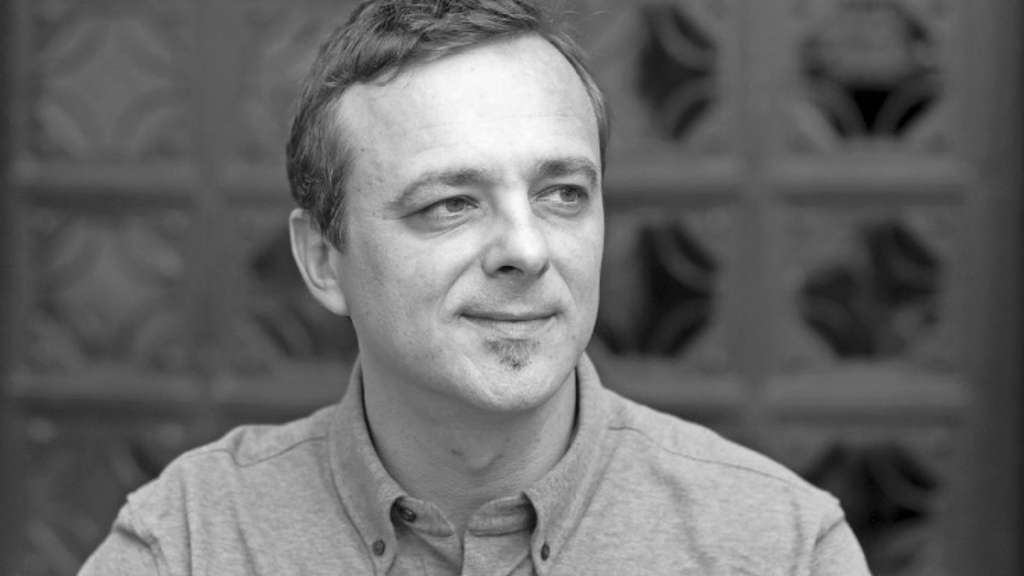
Interview with Igor Prassel, director of the Animateka International Animated Film Festival, ahead of its 22nd edition this year.
Animateka has been one of the most popular festivals in Europe for twenty-two years now. One thing that sets it apart is that its main competition has a geographical and political focus mostly on CEE Animation. How did this distinctive idea for the programme come about?
From the very beginning, I was thinking about how to differentiate our festival from the others. We decided to focus the main competition on Central and Eastern Europe with a few added exceptions such as Greece, Italy or Switzerland, basically countries with smaller animation output that we wanted to help make more visible, just as we wanted to support the visibility of CEE animation production (and co-production).
Has this original idea shifted over time? Or will this focus always remain connected with Animateka?
It is a living process and every year we discuss it. So far, it really works because we regularly screen many high-quality films in our competition that are not often presented at bigger festivals. This CEE focus also makes the selection process much more manageable. But, for example, in the student competition, we have broadened the scope and now select films from animation schools across all of Europe. To balance these two geographically focused competitions, we have a non-competitive program each year called “Best of the World”, and there are no geographical limitations in the feature-film selection either.
Animateka is a member of the Animation Festival Network (AFN), which also includes the Czech Anifilm, Slovakia’s Fest Anča, Romania’s Animest and Croatia’s Animafest Zagreb. What would you describe as the biggest benefits of this collaborative network for Animateka?
We are very happy to be part of this network and grateful for the financial support from the MEDIA programme. Thanks to this support, we can meet in person from time to time, not only through our computer screens. I appreciate that the collaboration between the festivals is systematic and well-organized, but also creative and inspiring. We brainstorm together while dividing specific tasks among the members. For example, Animateka is currently working on a distribution screening programme of short animated films for the youngest audiences (so we are clearing rights for five territories). The AFN holds regular online production meetings and programme-director meetings. We exchange ideas for future historical retrospectives, as well as suggestions for potential jurors and special guests (so that we don’t end up inviting the same names, or, on the other hand, if our festival dates are close, we can share travel costs and invite an artist to both events).
Apart from this important practical agenda, what are some of AFN’s long-term goals?
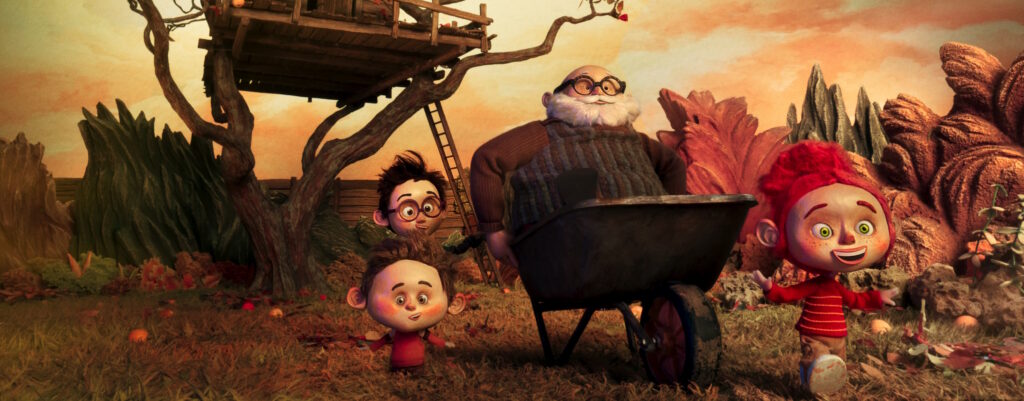
We have started a new group project connected to the Green Charter for Festivals, coordinated by Valentína Hučková from Fest Anča. It helps us think more practically about the ecological impact of festivals in many different areas. Another major issue we work on together within AFN is accessibility. We are developing specific film programmes and making screenings accessible to deaf and hard-of-hearing audiences, as well as blind and partially sighted audiences. This year, for example, we prepared an accessible screening of the feature film Tales from the Magic Garden with live sign-language interpretation and other accessibility features (such as adjusted light levels during the screening). We are still learning a lot, but this is something we want to keep developing in the future. And because Animateka is also a boutique distribution company, a long-term goal is eventually transfer these accessibility features from festival screenings into regular distribution. I believe that one of the important roles of film festivals today is to remain open to experimentation and to raise festival standards to a higher level.
Yes, festivals also have great potential to positively influence their local communities…
Yes, we are very lucky that our co-producers are the Slovenian Cinematheque (www.kinoteka.si) and the art-house city cinema Kinodvor (https://www.kinodvor.org/en/). They are not only partners in the sense of providing venues, we also regularly share programme ideas with them, especially in relation to audience building. Another important local partner (and sponsor) are Slovenian art and film schools: University of Nova Gorica School of Arts, the Academy of Fine Arts and Design and the Academy of Theatre, Radio, Film and Television (the latter two belong to the University of Ljubljana).
You even have a special jury composed of animation students from these schools, right?
Yes, our intention was to bring students from different schools together for one week during the festival and, with the help of two mentors (their professors, who moderate the discussions) encourage them to debate, analyse and reflect on animation. I believe this can be very beneficial for them in developing their own animation projects. Students also get a special festival accreditation for a symbolic fee, which allows them to see all of Animateka’s films. I think this welcoming approach is closely linked to the recent rise in quality within Slovenian animated filmmaking.
Yes, I’ve heard a lot of positive feedback about Animateka, especially from student groups…
We are very happy to hear that. For example, this year entire animation classes from Italy, Hungary and Estonia are coming, even without having films in the competitions. So we tried to upgrade our hospitability standards: for instance, we booked an entire youth hostel for the week of the festival so students can stay at an affordable price. We also organized a dedicated venue called the “Student Animation Center” to offer a space where they can meet, talk, and exchange ideas. We understand that taking good care of our guests and responding to their needs is essential. We feel honoured that more and more schools are choosing Animateka as their academic trip for their students. This is also a big motivation for us to keep improving and expanding our industry programme, AnimatekaPRO every year. AnimatekaPRO is increasingly becoming a space where students can meet future producers and collaborators.
This year’s large retrospective focuses on pinscreen animation. Can you walk us through this idea?
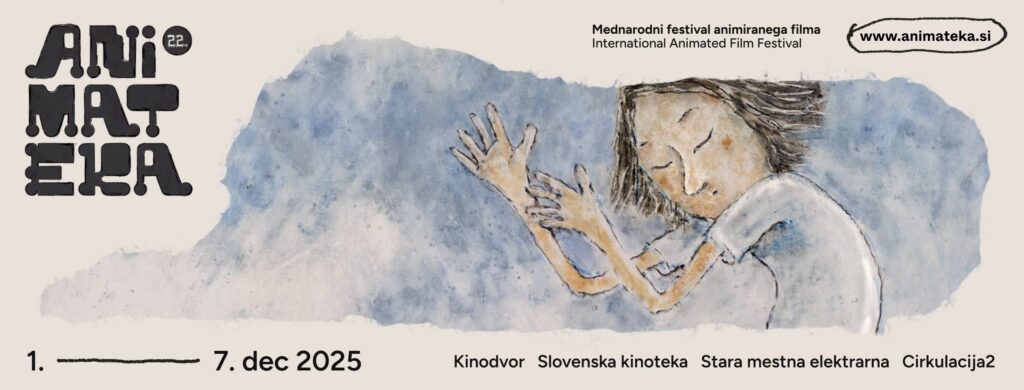
As mentioned earlier, we are very lucky that one of our co-producers is the Slovenian Cinematheque, which is part of FIAF (the International Federation of Film Archives). This makes it much easier to access older screening materials for retrospectives. We also have a long-standing collaboration with Jean-Baptiste Garnero from the French CNC and with other archivist and curators specializing in animated film. Last year, our Italian festival partner Piccolo Festival Animazione, lead by Paola Bristot, prepared a smaller version of a pinscreen retrospective, and it was ideal for us to expand it and invite special guests. For example, the Canadian illustrator and pinscreen animator Michèle Lemieux and last year’s winner of Animateka’s children’s competition Pierre-Luc Granjon, the author of the pinscreen film The Night Boots. He also created this year’s festival visual identity and is serving as a jury member. We have also invited Alexandre Noyer, the re-inventor of the new pinscreen series. And recently, around six new films have been made using Noyer’s new version of pinscreen – in Quebec, Germany, South Africa, Japan and Taiwan. So we finally had a full programme of contemporary films to include in our four-part retrospective, which also features documentaries about the pioneers of the technique. I am happy that we managed to prepare the largest historical retrospective of pinscreen animation to date, with almost everything that has ever been created using this original technique. The timing was perfect.
And finally, at the end of the interview, I really wanted to mention Phil Mulloy, to whom this year’s Animateka is dedicated…
Phil was a special person for me and for Animateka. He had been our dear guest many years ago, and just last year, I met him at Animafest Zagreb, where he received the Lifetime Achievement Award. We had a wonderful long conversation about the state of the world, future plans and creative ideas. I was very much looking forward to inviting him back to Animateka soon. This year, we are screening his remarkable film The Sound of Music as part of our opening programme, and in the years to come, we will continue to present his films at our festival. This year it is, above all, a gesture, and also a way of reaching out to Vera Neubauer and letting her know that we are thinking of her.