Patrik Pass & Juraj Krasnohorsky about Tales From the Magic Garden
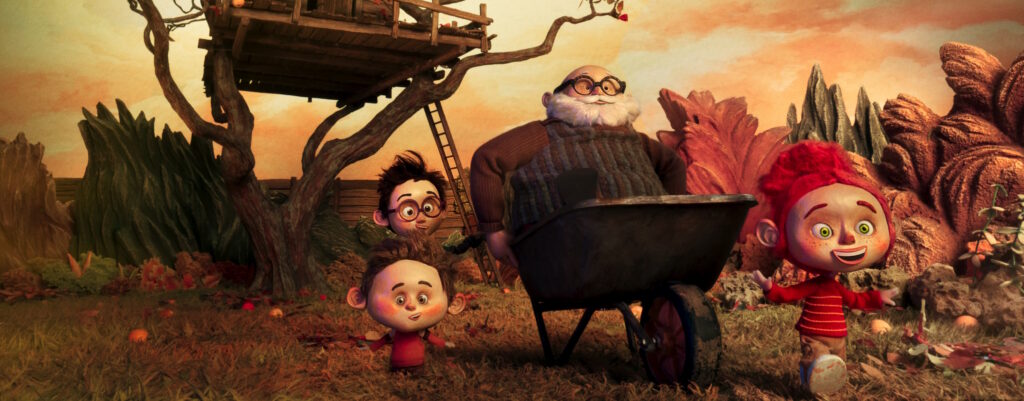
As the days begin to shorten and end in a blazing purple sunset, and the leaves pile up on the grass, TALES OF THE MAGIC GARDEN (directed by David Súkup, Jean-Claude Rozec, Patrik Pass & Leon Vidmar) takes you to the autumnal garden where Grandpa welcomes his three grandchildren. They are visiting for the first time since Grandma recently passed away, and her spirit of storytelling and imagination still lingers around the house. But one of the children continues Grandma’s life’s work and tells three stories to reconcile her brothers with life again.
These stories, based on the work of Arnost Goldflam, were adapted by three co-producing countries, Slovakia, the Czech Republic, and Slovenia, while the frame story was made in France. Nevertheless, the film creates a visually and narratively cohesive whole.
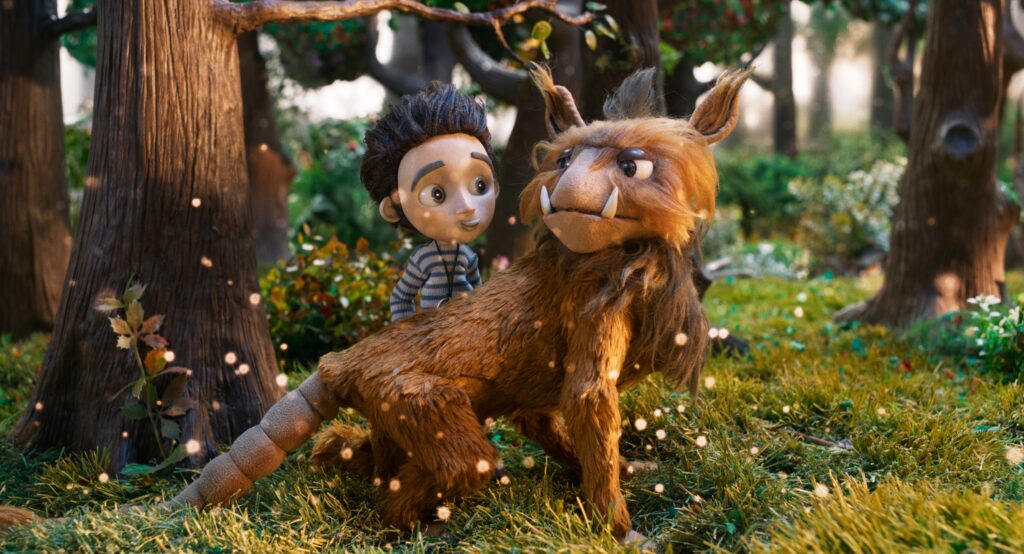
In the Slovakian chapter, directed by Patrik Pass, two young boys end up in an overgrown garden, where danger lurks… a terrifying monster flashes between the bushes. Until an old woman teaches them to appease the animal with apples. Lots and lots of apples.
Looking at the different chapters of the film, I would say that the Czechs have the Gothic part, the Slovenians have the psychedelic part, and the Slovak chapter is genuine horror! What does that say about Slovak people?
Patrik Pass: I love horror movies, but I wasn’t expecting to make one. I wanted this to be a big adventure for children, about exciting discoveries and exploring unknown territories. Indeed, we have a monster and a spooky old lady, which are typical ingredients for a horror movie.

And a secret garden, where the wind is blowing through the trees!
Juraj Krasnohorsky (producer and one of the driving forces behind the project): That’s one of the reasons why I picked this story. Exploring abandoned gardens is among my favourite childhood memories. In Slovak, we even have a word for this. ‘Opustka’ is kids’ slang for an old, abandoned garden where adventure lies waiting.
In this garden, we meet the monster. You use a well-known horror technique: suggesting the creature is more impactful than showing it.
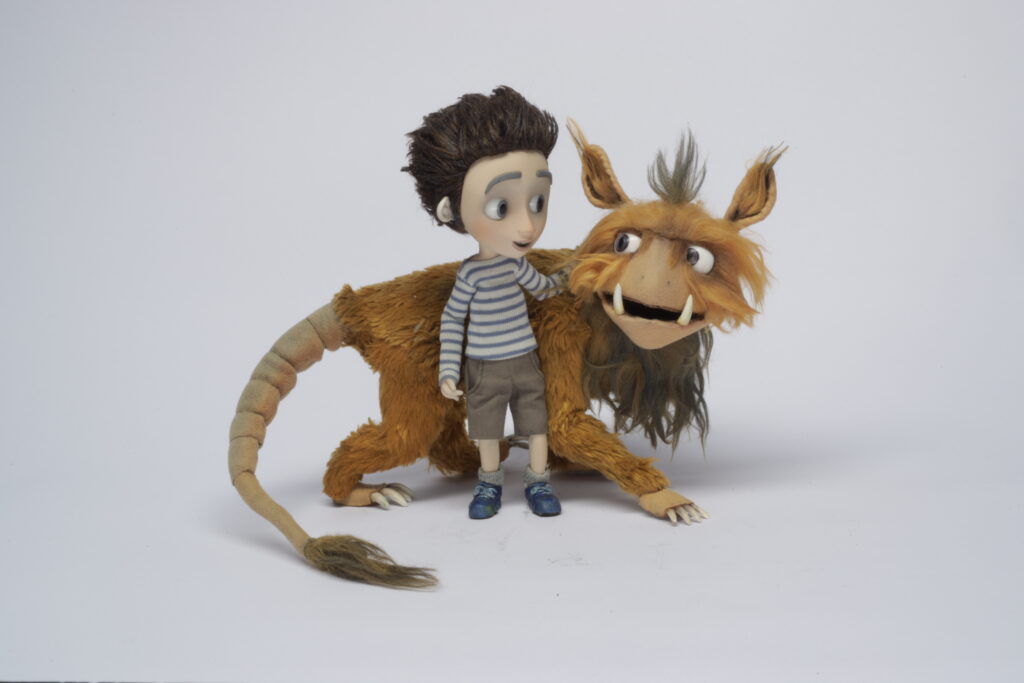
Pass: We all learned from ALIEN! It took us a while to find the right design for the monster. It had to look a bit rough, like an animal that had lived in the wild garden for ages, but also expressive enough to credibly transform from a gruesome beast into a fluffy, cuddly creature.
Krasnohorsky: There was little indication in the original text about how the monster looked. It was described as “not really a tiger and not really an ostrich…” So there you go!
You must have discussed beforehand how far you would go in scaring your audience.
Pass: Our story is about fighting fears and finding inner courage. Young viewers need to be a little scared at first, so that in the end, they experience the value of overcoming their fears. They will realise that there’s beauty to be found in unexplored territory, and that the power of imagination can be healing and enriching.
Krasnohorsky: We knew we had determined the audience correctly from the moment the film premiered at the Berlinale for 600 children. The few Slovak avant-premieres made clear that this film is perfectly suitable for a 5+ audience, and even younger when watching it with their parents. We prepared pedagogical materials for pupils aged 5 to 10 years old visiting the cinema in a school context. One thing is for sure: more than anything else, they love the monster. After the screening, they all want to have their picture taken with that puppet.
Your chapter contains an intriguing extra story about how the old lady came into possession of a monster.
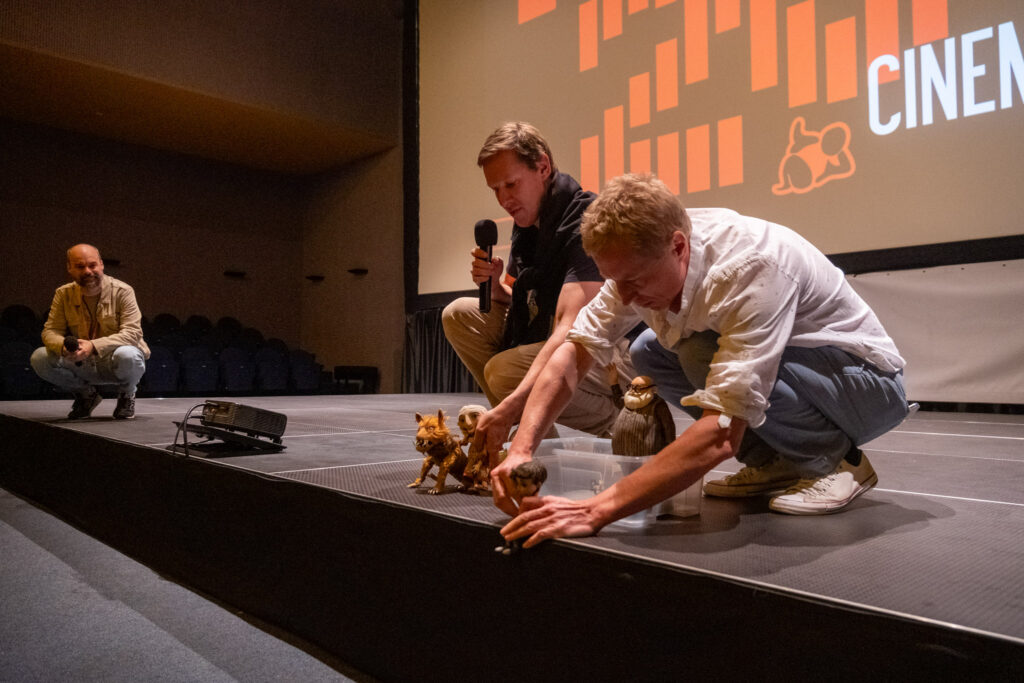
Pass: There is a thematic link between the plot and the subplot: the jungle adventure about an explorer catching a monster contains many parallels with what happens to Jonáš in the garden; both show a similar kind of courage. But visually, the plot and subplot needed to be clearly distinct, not to confuse our young audience. That’s why in our puppet animation film, the monster’s backstory is told through wall projections of cut-out animation.
You did it with a real projector?
Pass: We projected the 2D animation frame by frame on semi-transparent paper walls, casting the colours from the projection onto the characters in the room.
Krasnohorsky: This is exemplary for the entire film. We wanted everything to look as much handmade as possible. Few VFX were used throughout the entire shooting; everything was done on set, in the image, like creating an atmosphere through the light entering the room.
Was that key to the continuity in the overall design?
Krasnohorsky: We wanted to work with one designer, one editor, and one composer to create a unified, coherent look for the film. According to Marc Bonny, representing the French distributor Gebeka, the one crucial thing missing was an overarching, unifying story. We followed his advice, but it took us a couple of years to get there. Designer Patricia Ortiz Martinez defined the style for the entire movie, except for the overarching French chapter. Co-director Jean-Claude Rozec developed his own style, which causes a clear (but not too abrupt) distinction between the siblings visiting their grandfather and the stories they make up.
You also used real actors as inspiration.
Pass: To distinguish our main character, Jonáš, from his brother, we made some tests with actors, from whom we singled out certain gimmicks and facial expressions, which we then conveyed on our characters. That’s how we created the hand-wringing of the uncertain Jonáš, the self-satisfied stick-waving of his brother, and the slow walk of the old lady.
Krasnohorsky: The character of Grandfather is also modelled on a real person, namely Arnost Goldflam, the Czech author of the original book.
The set you were working on must have been huge.
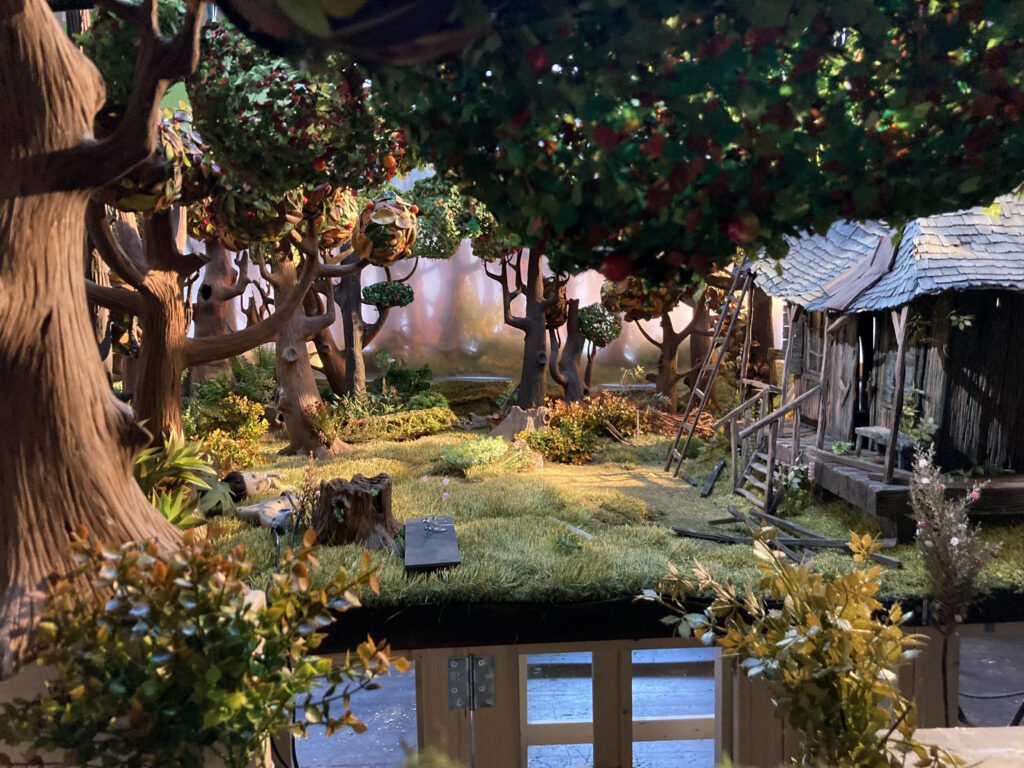
Pass: We used large, interchangeable square blocks, offering endless variations. We could record one scene while already preparing the next. For the design of the organic elements, we combined paper leaves with the plastic flowers we bought in bulk from a Chinese shop. We used natural materials only on the trees; all other parts were plastic or wire. The grass was made of an old carpet that we found by a garbage container, which we painted green.
You’ve picked the perfect moment for the release. Your film conveys an autumn atmosphere. Moreover, this is the apple season, and apples play an important role in your story.
Pass: The story indeed has a melancholic tone. We didn’t make a depressing film, even though children will understand that sad moments are part of every person’s life. In autumn, leaves are falling, as if the trees are dying, but actually they’re preparing for winter. Apples are tasty and nutritious. Our film tackles difficult topics, but ultimately, we offer the audience something hopeful, something nutritious for life’s next season to come.
Krasnohorsky: In autumn, when the cold is setting in, the cinema is a cosy place to seek shelter. But any similarities between the season and the release date are coincidental. We are releasing the film together with the Czech Republic, and it was already released in Slovenia earlier this month. However, Slovak television is considering broadcasting TALES FROM THE MAGIC GARDEN as a Christmas movie. It’s a film for and about families, and despite the drama, the audience leaves the theatre with a smile on their faces. Humour and a joy of life are in the DNA of all the works by Arnost Goldflam. Christmas is the moment when families come together and take the time to talk and tell stories, just as our film does.
With the shadow of death hanging over it, this could also have been a film for Halloween.
Krasnohorsky: Most parents eventually have to deal with children asking questions about death. This is a phase in every child’s development. Many parents don’t know how to approach such topics, but our film offers them a safe opportunity to do so. We won the ECFA Award at the prestigious Giffoni Festival, and the French Association of Distributors & Cinema Owners has put TALES FROM THE MAGIC GARDEN as one of the few titles on their ‘recommended for young audiences’ list. A cinema visit is a significant investment for families with children, in times when everything becomes more expensive, but such awards confirm that taking the entire family to see our film in cinemas is worth the investment.
Of all the chapters, the Slovak one has changed the most compared to the original book. Patrik, you were asked to put all the pieces of the puzzle together?
Pass: Juraj invited me to work on the screenplay. I started rewriting and ended up with a totally different version. After I helped with storyboarding, Juraj tried to persuade me to also direct the film. At first, I refused; I had no skills whatsoever in puppet animation. But he eventually convinced me, and it was the perfect learning experience. Luckily, I was surrounded by the best of the best in stop-motion animation; co-director Monika Houdková, Head of Animation Marek Jasaň, Matouš Vlachár, Václav Fronk, and Václav Krejčí all helped to cure my growing pains.
Krasnohorsky: I had collaborated with Patrik as a scriptwriter before; I knew his exceptional talent for telling stories. I was sure that he could handle the directing as well; we only had to convince him that he was able. Patrik had done short films, animated segments, and music videos, but never directed a feature film. We had him surrounded by the right professionals to make him feel comfortable as a director. I’m happy he found the courage.
Did you take a course on how to become a puppet animation master in 10 lessons?
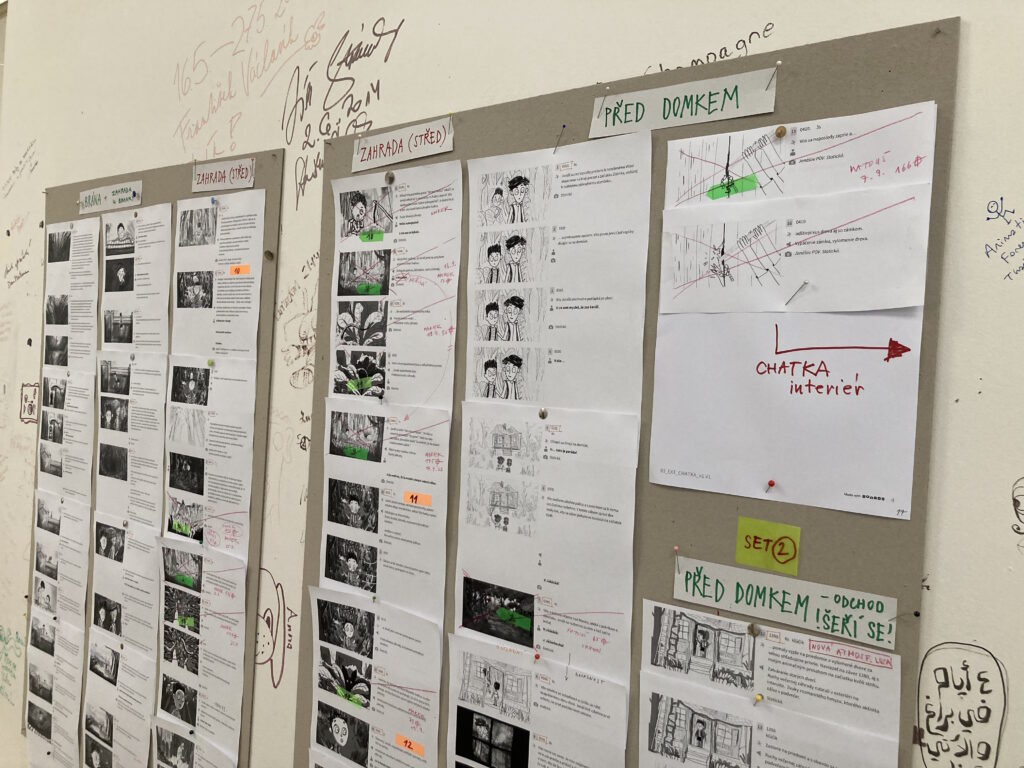
Pass: At first, I was anxious; I was afraid of disappointing Juraj after he had placed so much trust in me. I meticulously prepared the storyboard and animatic. For a month, we conducted tests at the Barletta Studio in Prague, where the film was to be shot, and I set myself several goals: to be the first one in the studio and the last one to leave, and to participate in every task, from cutting out paper props to painting and sanding. But being so focused, I stuck so closely to the planned shots that it created tension in the studio. The hardest task was to offer collaborators enough creative space while remaining faithful to my directorial vision. Learning how to cooperate with a team was more challenging than all the technical issues.
As soon as the shooting started, you took some distance.
Pass: Juraj wanted me to stay in Prague for at least half a year, but my family didn’t want me to be gone for so long. We agreed that I would come to Prague for one month, thoroughly preparing for the shooting, going through every scene, and after that, I went home and had daily consultations with our co-director, Monika Houdková.
Did this project have an impact on your directing ambitions?
Pass: When graduating from FAMU, I tried to make a 28-minute-long film, but was never properly able to complete it. It made me lose my energy. Animation is a time-consuming process; you need to devote several years to one project; in the case of TALES FROM THE MAGIC GARDEN, even 13! The opportunity to direct a puppet film was very valuable, and I learned so many things from it. One is that directing short formats suits me better than feature-length work. You embark on a short film with full commitment, and you can finish the job before you get bored or exhausted.
Krasnohorsky: I appreciate your modesty, Patrik, but you seem to have forgotten that we already have two new projects in the making! One is a live-action feature, and one is another international co-production that we’re developing with France and the Czech Republic, a stop-motion horror series for adults called DOLLS, and Patrik should be directing at least two episodes.
I confess that when I first heard about TALES FROM THE MAGIC GARDEN in 2018, back then still called OF PEOPLE AND THINGS UNWANTED, I thought: what a lovely project, and what a shame that it will never see the light of day, because the setup is too complicated.
Krasnohorsky: Although this was the most unconventional setup I ever worked with, it was my best and easiest experience in co-production so far. From the beginning, we agreed to take equal shares in budget and workload. With four skilled producers trusting each other, everything that seemed scary about the setup actually turned out to be a blessing. The first thing we asked after finishing the film was, ‘What will be our next project?’
What made you believe that things could work out among those four countries? Is it the language that you have in common? The storytelling tradition? Or the budget?
Krasnohorsky: The main thing we had in common was the need to find a solution to the lack of financial support for feature films. We needed to trick the system, getting financed for a short film, while actually preparing a feature. That was the logic behind our method. And of course, the love for stop-motion animation runs in our countries’ DNA, and we wanted to revive it. When we started in 2016, in Slovenia and Slovakia, not a single feature animation had been made in modern history, since the fall of the communist bloc. Recently, a few Slovak titles have been distributed successfully. But back then, we were the first.
How can this change be explained?
Krasnohorsky: It’s not just about financing; it has to do with the network created by CEE Animation, with confidence, and with the growing skills of producers in international co-productions, which isn’t something you learn at school. Financing is still the biggest issue in Central European countries, but we are the living proof that, within these limitations, beautiful films can be made, and we are ready to continue this tradition.
Gert Hermans
On behalf of CEEA