Estonian Academy of Arts
The International Hub of Animation Creativity
Estonian animation has a long history of bold visual thinking, bizarre humour and a fondness for dark atmospheres. Authors like Priit Pärn, Ülo Pikkov and Priit Tender (and many more) have been successfully representing this relatively small Baltic country, which continues to have a great impact on auteur animation around the world.
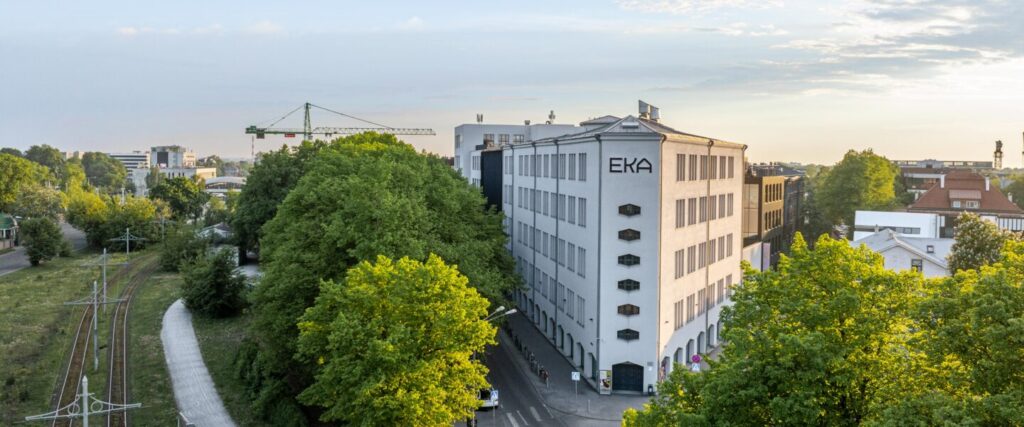
Apart from producing its own Estonian artists who collect awards at many prestigious animation festivals (for example, the Best Animation Technique Award at the Ottawa International Animation Festival in 2016 for Velodrool by Sander Joon), perhaps even more meaningful for today’s global community of young animators is the popular and highly successful international MA programme at the Estonian Academy of Arts (EKA). It’s hard to miss EKA films when attending student competition screenings at festivals these days. In terms of festival presence, EKA ranks among the most successful animation schools today.
The two-year MA programme at EKA (taught in English) was established in 2007, only one year after the Department of Animation itself. To this day, the programme remains very popular among young animators thanks to its encouragement of an individual approach to filmmaking, versatility and creative freedom. Among the latest successes of this international programme is Natalia Mirzoyan’s film Winter in March, which, among other festival prizes, was awarded at this year’s La Cinef competition in Cannes.
But there’s no doubt that this successful international programme could not exist without the strong foundation of Estonian animation itself. As many international students mention in interviews (and in an informational spot on EKA’s website), the initial idea of studying in Estonia often came from a powerful experience of watching an Estonian animated film. This was the case with Colombian student Carlos Santiago Ordóñez Alarcon, who was mesmerized by Sander Joon’s aforementioned film Velodrool.
As is the case with many other animated films coming from EKA, Velodrool is an animated short with no dialogue, relying solely on its strong, sharp visuals. In this dark, bizarre story of robot-like velodrome cyclists, we quickly realize that anything is possible in this animated world: bicycles turn into human horses, a mysterious pink bunny serves as a source of doping, and one can get shot right at the beginning of a race by the starter himself. All these visual tricks and storytelling twists and turns keep the audience on their toes and leave a lingering sense of uneasiness long after the final credits roll.
Similarly attracted by the wide-open creative possibilities and the craftsmanship of EKA’s animation was Latvian artist Anu-Laura Tuttelberg (who later also became a visiting lecturer and an important figure in EKA’s MA programme herself). Her stop-motion film Fly Mill received awards at many festivals, including Primanima, Riga International Film Festival and StopTrik International Film Festival. In Fly Mill, Anu-Laura Tuttelberg had already demonstrated her precision in craftsmanship and puppet-making, something she successfully continued to develop in her next internationally acclaimed films, Winter in the Rainforest (2019) and On Weary Wings Go By (2024).

Fly Mill focuses on a miller who lives in a watermill, bakes fly-bread every day and raises ducklings whom he wishes to set free one day. But in the field next to his home, hunters come to shoot birds. There is, however, much more present in the gloomy atmosphere of this stop-motion world than a single logline could capture. Inspired by photographs Anu-Laura Tuttelberg had taken several years earlier through an attic window overlooking an autumn field while flies clambered along the window glass, as well as by the photo series How to Hunt by Danish photographers Nikolai Howalt and Trine Søndergaard, Fly Mill is full of cultural and artistic references. The author shares some of them on her portfolio website, giving us a fascinating glimpse into the auteur process and the extensive preparation that takes place long before the screenplay is finalized and shooting begins.
The rest of the films selected for the curated EKA collection continue to beautifully demonstrate the versatility and originality of Estonian and EKA animation over the past decade. Room with a Sea View (2020) by Leonid Shmelkov follows in the tradition of Priit Pärn’s bizarre, dialogue-free humour but adds a contemporary, eco-conscious, soul-searching twist. Gaia (2018) by Jass Kaselaan follows a similarly ecological path with its (again dialogue-free) existential dance and interaction between humans and animals.
The final two films in the collection, Procrastination (2018) by Nata Metlukh and Dream Cream (2019) by Noam Sussman, represent for me the wild joy of creative freedom in animation, where any silly, original idea can lead to a funny and cleverly executed animated short (or, in the case of Procrastination, a super-short) that doesn’t need to have any deeper meaning beyond the simple joy of animated freedom.
EKA’s recent animated films, whether dealing with serious topics or silly, bizarre ideas, are always full of this creative freedom, an original auteur point of view and the simple joy of being able to transform inner artistic ideas into the wide-open world of auteur animation. And if these qualities don’t change, we can be sure to see many more EKA films in student competitions across the international festival circuit in the future.
Eliška Decká
Ekstremely Kreative Attitudes
-

An addicted biker runs out of cigarettes. He joins a race to get more, but has to take help from some peculiar people in the audience to stay in the competition.
- Drama
- Comedy
- Experimental
-
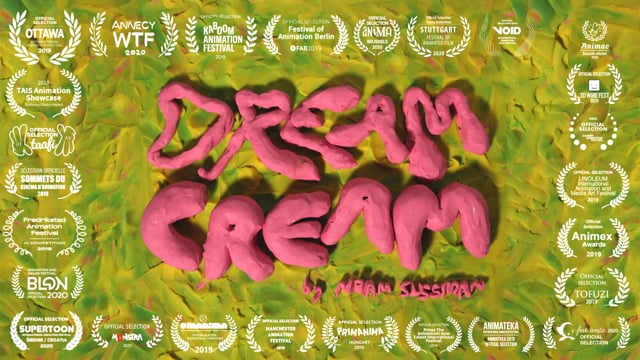
An elderly couple is addicted to a psychedelic face cream.
- Drama
- Comedy
- Fantasy
- Romance
- Abstract
- Experimental
-

Herbert arrives in the seaside city on a long working trip. Accidentally he falls in love with a very strange beautiful saleswoman in a flower shop. He suffers from insomnia, which he treats by watching billiards on TV. But now it doesn’t help anymore. His obsessive passion keeps him awake…
- Drama
- Comedy
- Abstract
- Experimental
-
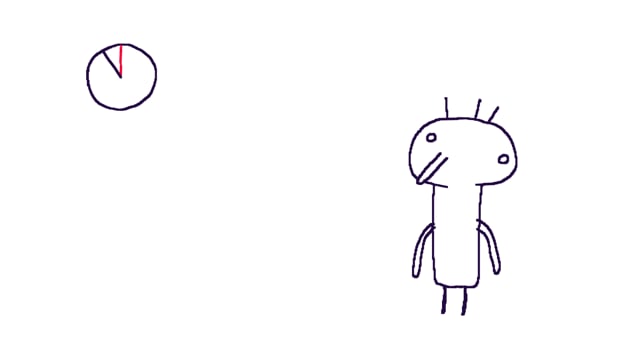
A bird tries to meet a deadline.
- Comedy
- Abstract
-

The protagonist is a Miller living in a watermill. He bakes daily bread and raises ducklings whom he wishes one day to set free. But on the field next to his home, hunters go to shoot birds.
- Abstract
- Horror
- Tragedy
-

The Gaia hypothesis proposes that Earth is a giant self-regulating system, which is able to maintain and perpetuate the conditions for life on the planet.
- Drama
- Horror
- Experimental