Chris Robinson: Something just screamed out at people
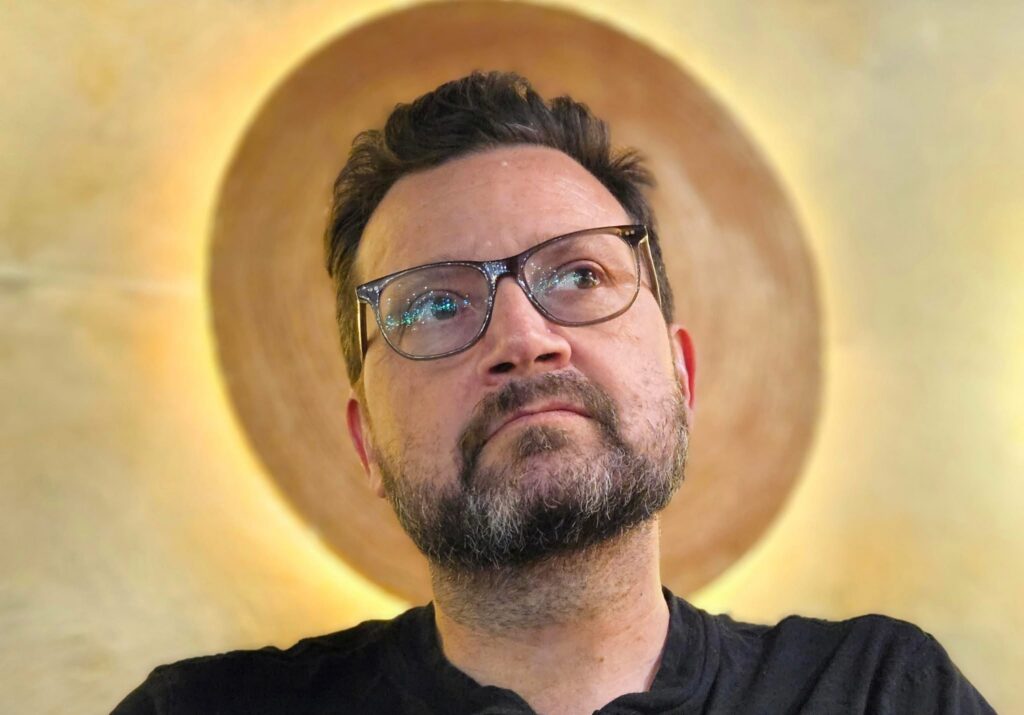
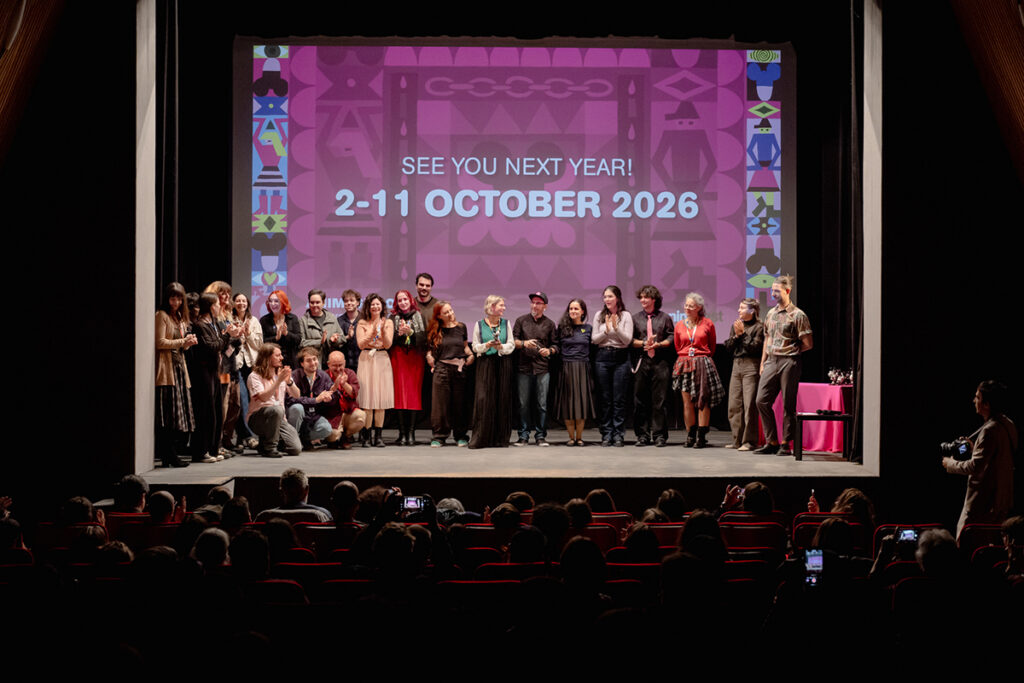
Canada may seem far away, but it isn’t really. It lies roughly halfway between Croatia and France. Or, to be more precise, halfway between Zagreb and Annecy. At least, according to Chris Robinson, Artistic Director of the Ottawa International Animation Festival (OIAF), which will soon be celebrating its 50th edition (23–27 September 2026).
Since becoming the OIAF’s Artistic Director in 1996, Robinson’s perspective has reached far beyond the festival’s home city. He has strong connections with both the North American and European animation scenes; through his work for Animateka, he is firmly rooted in the CEEA region. So catching him at his Canadian home, that is actually quite exceptional.
Chris Robinson: Since I married a Ukrainian woman, I’ve been mostly residing there, in Lviv or Kyiv. It’s a transition, not hearing air-raid sirens all the time. I love listening to my Canadian colleagues constantly complaining about our lousy bus and train service. In Ukraine, every train runs on time, even if the station has been bombed. When I’m there, I’m just living a normal life – normal abnormal – writing a book about Ukrainian animation or working on the festival.

Why is the owl there on the festival poster? And why does the poster look like it does?
Robinson: The owl was there in the first edition, expressing our connection with nature and – already in 1976 – with Indigenous culture. In the ’80s and ’90s, they shifted to the phenakistoscope as the new image, but I never liked it. For our 40th anniversary, we went back to the owl as a nod to history. I felt it had more visual possibilities than that boring phenakistoscope. Every year, we ask somebody to do our poster, with but one instruction: there needs to be an owl in there somewhere! Because of our 50th anniversary, I wanted to find someone special for the job. I’ve always liked Seth’s work, and he said yes.
What made 1976 the right climate for a festival in Canada?
Robinson: In those days, the Association Internationale du Film d’Animation, ASIFA, started all these festivals, such as Annecy (1960) and Zagreb (1972). When the return of the Mamaia festival in Romania fell through in 1976, ASIFA believed this was the moment to include a festival in North America. Canada had a history in animation; because of the National Film Board (NFB), we were more aware of auteur animation. Ottawa has its own animation history. The NFB started in Ottawa, Norman McLaren’s famous NEIGHBOURS was shot in a park here, and we had an industry developing in the ’60s and ’70s.
What can be done in Ottawa today that can’t be done anywhere else?
Robinson: I think we’re a fun festival; we want everyone to feel included. I’d say that we’re a combination of Annecy and Zagreb. Animafest Zagreb feels rather intimate, with a focus solely on indie. Like Annecy, we do have an industry programming side, but it doesn’t overwhelm the indie events. OIAF is a nicely tempered mix of these two worlds. We’re the three oldest animation festivals, so it makes sense that we share some characteristics. We’re one of the only festivals to show student, commissioned, experimental, and narrative films all in the same screenings, which makes for an interesting experience.
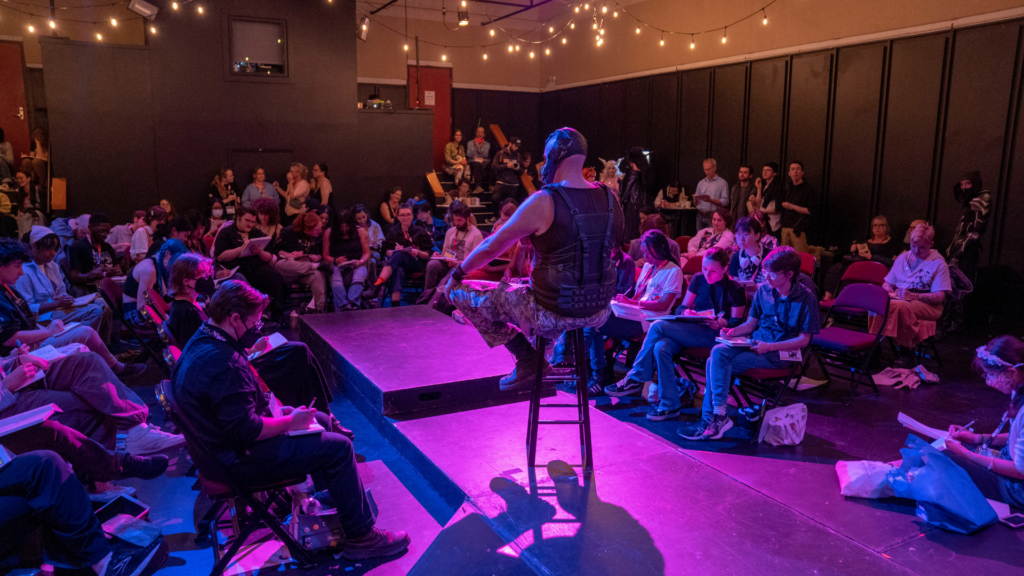
Except for children – they have a separate kids’ competition and a separate kids’ jury.
Robinson: I’m very particular about the construction of our competition screenings, and I generally find that kids’ content doesn’t have a vibe that works in that context. Some of the people in the kids’ and teen competition feel a bit pushed to the side, but it’s a choice – there’s only so much time in one day. The kids’ jury, made up of local children, adds to the festival, and the schools that come to the screenings and engage with the filmmakers bring a different energy that really connects with the general public.
How well is the festival integrated into the city’s cultural life?
Robinson: It has been a battle with ups and downs. All over the world, people speak highly of Ottawa, but there are still citizens unaware of our existence. First and foremost, we’re addressing the animation community. We’re mainly preaching to the converted; short animation is a bit of a niche thing. But last week, we had a free public launch event with a band, drawings, animation, food, and drinks, and the fantastic turnout showed me that the locals are very aware of the festival and have a bit of pride that this big international event is held in Ottawa. That was a nice moment.
What do you have in mind for the 50th anniversary edition?
Robinson: Combined with the 200th anniversary of the city of Ottawa! All these festivities are a bit against my nature; I’m more of an “Okay, now let’s get on with business” type of person. We’ve taken a look at Canadian films from the past 50 years, going through all the entries we’ve had, and picked our top 50 since 1976. We’ve been making pretty punkish selections, not really obeying the canon. Even Frédéric Back’s legendary THE MAN WHO PLANTED TREES is not in our list of 50 in 50: OIAF’s Favorite Canadian Animation Shorts. During the festival, we will invite attendees to vote for their favourite. Two awards will be presented during the OIAF Awards Ceremony: the programming team’s top pick and a public choice award determined by audience vote.
Which title did you have to fight for personally?
Robinson: I didn’t have to fight for anything; we were pretty much in tune. The most interesting part was seeing films that won awards at some point, and now you’re wondering why; some films haven’t held up well over time. During this year’s festival, we’ll host a rather massive panel discussion with all the Top 50 filmmakers attending. That should be a lot of fun to get animators talking about old works, discovering what they think of their respective films now. And to celebrate our anniversary, we collaborated on a rather ambitious exhibition called Frame by Frame: Animation in Ottawa. It traces the history of animation in the city, focusing on the early days of the NFB, the assorted studios that have come and gone, and some of the key independent artists who have worked here.
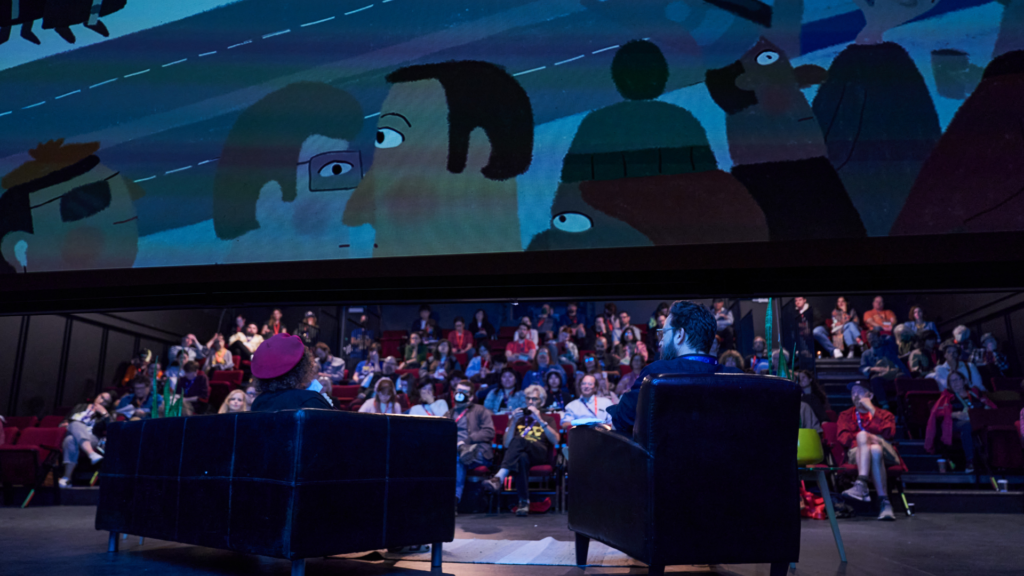
If you look at this year’s selection of films, what does it tell you about the new generation of animation artists?
Robinson: 35 years ago, I didn’t see a lot of films dealing with addiction or mental health. In the last couple of years, the pendulum has completely swung. Testimonies about depression and social anxiety have become so internalised. But then I challenge the makers: “Let’s go deeper! Why do you have these problems? Is it maybe the systems we’re living in today?” Look beyond yourself; look outside at what’s going on in a world collapsing around us. And, in general, short films have become longer. Back in the pre-digital ’90s, every minute cost you a fortune. In many cases, films nowadays could have been cut a bit more. That new technology also causes anxiety, even more on the industry side than among independent filmmakers.
Looking at the programme at a glance, I see a fair share of Canadian, European, and Asian animation.
Robinson: There has always been a good mix in terms of gender and cultural background in Ottawa. Even back in the ’90s, it was just obvious to us. I have a diverse team of colleagues who help me. We don’t think about quotas; we engage with the films and pick what is best. Just a selection for the festival can set things in motion, and in some cases we certainly do bring the spotlight to films. Sometimes we reject films that score at other festivals, and sometimes we uncover titles that were rejected elsewhere – we just go our own way. As a Canadian event, we need to make space for Canadian films, which we do through the Canadian Student Competition and the Canadian Panorama.
It helps that you don’t have a background in animation.
Robinson: I came from a film studies background, with a passion for music, writing, and comedy. I fell into animation when I started coordinating the festival’s selection committee in 1992. Up until then, I’d only known Disney and Bugs Bunny, and suddenly I was seeing Phil Mulloy’s films, roughly drawn but with a lot of depth to them. Quite often, everybody was fixated on technique. “Oh, that’s oil paint, and he painted it with his finger.” Yes, but the result is boring; nothing is being said here. Phil Mulloy’s work didn’t look like some grand piece of visual art, but it had a kind of urgency; something just screamed out at people. That was what interested me: what artists had to say. When I first took over the programming of the OIAF, I appeared almost out of nowhere, with limited knowledge of animation. But over time, people came around and understood that I did have some sort of method. Coming from a different background simply meant I looked at the work from a different perspective. I always remember one moment from 1996, my first year as full executive director: we screened some funny but quite crude American claymation, and I saw Frédéric Back sitting in the audience, shaking his head in disgust, and I thought: “Yes!”
Who – dead or alive – would you have wished to welcome to your festival jury someday? Who is the one you never even dared to ask?
Robinson: That never happened; I’ve had everybody. But I’d be curious to go back in time and bring Norman McLaren in to see how he reacts to where animation is standing now. I actually cant think of anyone I haven’t dared to ask! The poster designer is generally where I run into that question. For example, I just rolled the dice and asked Seth to do our poster. I really didnt think he’d say yes…. And for 2027, we just confirmed that the great Chinese artist Sun Xun will do our poster.
The OIAF has forged strong ties with the International Animation Film Festival Animateka in Ljubljana. Was that your way of building a bridge to Europe?
Robinson: I’ve always had bridges to Europe; most of the texts I’ve written were not very North American-focused. If I’m married to the OIAF, then Animateka is my mistress. I went there for the first time in 2013, and it had a vibe that I immediately liked. But when I went back in 2018, I was so annoyed by the filmmaker talks moderated by my colleague Igor Prassel that I told him as much. He said, “Next year, come back and co-host those talks with me.” And I was asked to be a consultant for the competition selection. I’ve been doing this for eight years now, and I like it a lot. It’s a fun team. Animateka, with its Central European focus, offers me a chance to watch films that didn’t make it to Ottawa and see them in a different context.
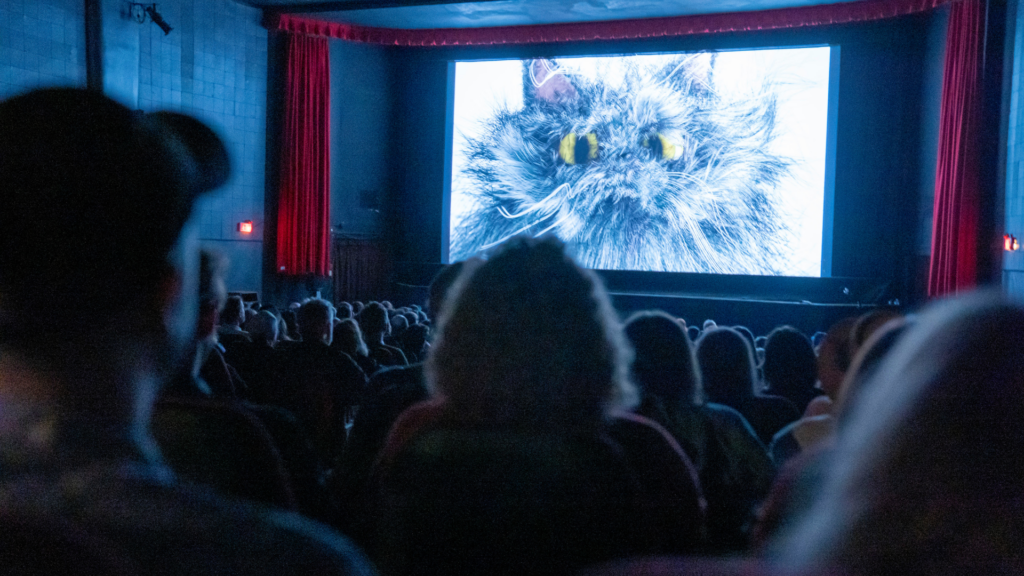
You know the capitals of all three Baltic states, and one of your first books was about Estonian animation. How would you compare the European scene with the North American one?
Robinson: I always had a soft spot for Estonia, and right now, I’m working on a book about Ukrainian animation, which is a completely different vibe. I find North American students’ work often rather immature. Half the time, you feel like they don’t have anything to say, or don’t know what they want to do with their lives, or they’re just trying to get a job at Pixar. Many schools in the US and Canada are set up to provide career-oriented training; it’s not about becoming an independent artist, making your own films. What we get from European or Japanese schools is just so different, with a better sense of storytelling.
How would you describe the profile of Canadian animation in the last 10 years? Consider it a question from an outsider who doesn’t know much about that scene.
Robinson: It’s changed so much in the 35 years I’ve been on the job. There was a time when every short film came from the NFB. That has radically changed; nowadays you’re seeing films from all over the place: independent features, music videos, self-funded experimental stuff… We’re really lucky to get great support for the arts. If you asked Canadian artists, they’ll say it’s not. But with federal, provincial and local funding, there are many possibilities here, even on the industry side.
You keep making that distinction, as if ‘the industry’ were a different world that has nothing to do with the OIAF.
Robinson: Our balance of industry and indie/auteur is quite special. I love that we bring these often very different worlds together. Compared to Priit Pärn, Joanna Quinn and other auteur animators, studio animation is a completely different universe, with different goals and processes. One is making works for a market, trying to appeal to as many folks as possible, the other is more individually driven with a need to share a thought, feeling, or story with the world. They’re trying to make a deeper connection, and not to sell merchandise.
European animation survives thanks to co-productions, but rarely with Canada. I only see Canada co-producing with Japan.
Robinson: There was a period when the NFB was co-producing a lot, but I kind of had problems with it. Co-producing films by Kōji Yamamura and Priit Pärn, wearing my Canadian hat, it doesn’t feel right. PILOTS ON THE WAY HOME is distinctly a Priit Pärn film; there’s nothing Canadian about it. Some of that money could have gone to some emerging Canadian artists. But the NFB doesn’t seem to be doing that anymore. So you don’t see many co-productions with Europe, even though there are measures and tax credits that could benefit both parties.
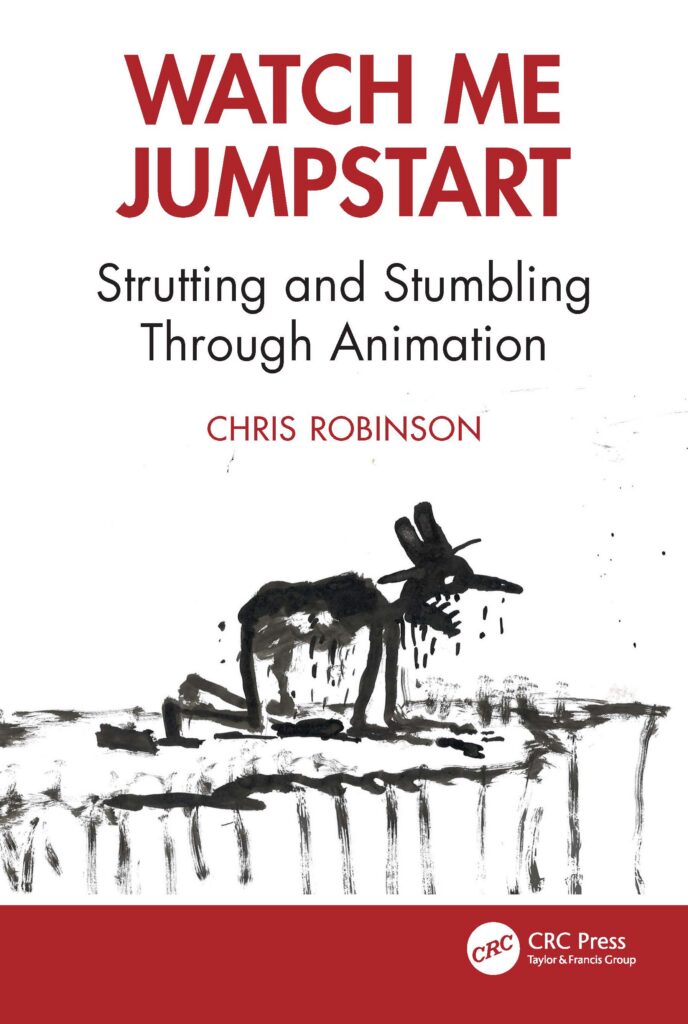
You have collected all these observations in your new book, Watch Me Jumpstart – Strutting and Stumbling through Animation.
Robinson: I call it “a distorted memoir”. It’s my life, told through the world of animation festivals, with different approaches to programming. Before the internet, we used to get film cans sent to us for selection, entries were mailed in, and you had to type everything in by hand. I wrote all of this down so people can see how much it’s changed.