
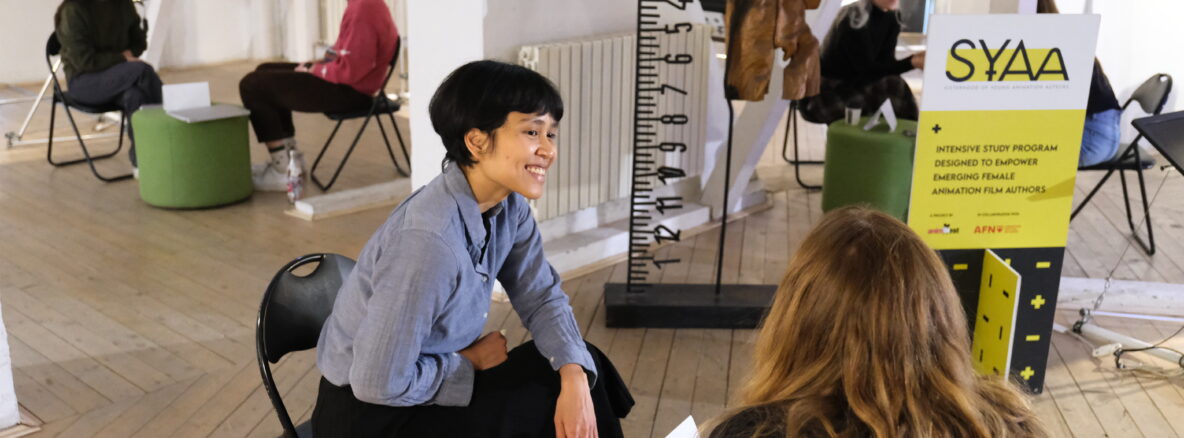
Helga Fodorean: Sisterhood of Young Animation Auteurs is More Than a Workshop
When Helga Fodorean and the team of the Romanian Animest International Film Festival Animation organized the very first seven-day workshop of Sisterhood of Young Animation Auteurs (SYAA) in 2021, they probably had no idea what a meaningful activity – and, more importantly, community – they just created and will keep on strengthening still five years on. The last mentoring workshop in Bucharest finished just this March and it gave us a great opportunity to talk to the main leading force behind it all, Helga Fodorean and to catch up with her on her fresh experience but also the memories from the early days of the SYAA.
Could you describe the very first idea of Sisterhood of Young Animation Auteurs? How did it all start?
As with many things within our underfunded cultural sector, this project was born because of a financing opportunity. In 2020, Eurimages put out a call within the framework of the Eurimages Gender Equality Strategy for initiatives that would help solve the problem of gender imbalance in the film industry. At that time, we were already thinking at Animest about activities like that, so it was a great timing.
The first year of SYAA workshop went really well and the feedback was overwhelmingly positive, so Eurimages decided to renew our support for three more years. That was very important for us because it gave us the luxury of secured continuity and allowed us to develop the project even outside of the timeframe of the seven-day workshop.
And why a workshop focusing on women and specifically women directors?
The focus on women directors at the beginning of their careers was based on our research together with Caragiale University of Theatre and Film in Bucharest which revealed that, between 2016 and 2020, although 70% of the animation students were female, according to the results published by the National Film Fund (CNC), only 14.44% of projects were submitted by female auteurs. Our research is further supported at the European level by numerous studies conducted by cultural institutes and gathered by the European Commission.
The whole workshop is meant to inspire women auteurs and encourage them to take a step forward toward leading their own projects. We saw that in our region, there is a huge number of female students and promising artists but then they disappear into supporting roles like background or ink artists etc. Few of them go on to write or direct films.
How can the SYAA workshop help them achieve that? Could you describe the workshop’s content and structure?
The structure of the workshop is basically the same since the beginning. We have two group leaders: one comes from scriptwriting and the other from the more pragmatic background of production. The scriptwriter is Raluca Mănescu, a Romanian writer with extensive experience of writing for TV, series and feature films. Katarzyna Gromadzka, who is the other group leader, is a producer and co-founder of Momakin and co-organizer of Animarkt Stopmotion Market. Together with them we choose the participants and both are consulted on the schedule as well. They are the key mentors of the workshop.
But you also have many other mentors and speakers, right?
Yes, each year we invite also several guest speakers to cover specific topics. One of our regular speakers is Theo Pârvu, a lawyer specializing in copyright and intellectual property. Even if it might sound a bit uninteresting, his lectures are always among the most engaging, with many questions from the audience.
Other guest mentors are usually curators or festival organizers (like Waltraud Gruber from Tricky Women Tricky Realities or Chris Robinson from Ottawa International Animation Festival) – people who give our participants a bit of inside into the industry and help them understand, for example, that one festival rejection doesn’t mean their film is bad.
Every year we also invite a female artist relatable to our participants (similar in age, profile and background) who has already achieved some success in her career and can share her own first-hand experience. In the past, we were lucky to host, for example, Špela Čadež or Michalea Mihalyi.
That all sounds wonderful. Who can apply and how?
The first two editions of SYAA (2021 and 2022) were focused only on participants from Romania & Moldova. Starting in 2023, however, we expanded to Croatia, Slovakia, Slovenia and Czechia (countries participating in the Animation Festival Network), as well as Ukraine (for obvious reasons). In 2024 we also added Bulgaria due to its similarities with the other member countries. So, every woman auteur from these countries is eligible. Age is not relevant. We focus on those at the beginning of their careers as directors. We usually prefer authors working on their first or second professional film but we can sometimes make an exception for a very promising student.
What does the application include?
We try to keep the whole process very simple, and we are happy to consistently receive around 70 applications each year. The most important part is the motivation letter. We also ask for basic information about the project they are applying with, as well as a professional CV.
Tell me more about the project component of the application and its importance for the workshop.
Since 2022, artists have been applying with a project for the SYAA workshop. We realized that when mentoring topics such as scriptwriting, production, distribution, or legal matters, it is much more effective if everything is directly connected to the participants’ own projects. It makes theoretical concepts more concrete. However, we don’t focus too much on whether this specific project will ultimately be realized. What we aim to achieve is to support women in making their own films, whether it’s this project or another, and continuing their auteur careers. The project serves more as an anchor for the workshop.
What are the practical aspects of attending the workshop once selected? What costs do you cover?
We cover accommodation, meals, and tutoring. The only investment required from participants is travel, which is fortunately not too expensive due to the geographical proximity of the participating countries.
That sounds very accessible. How is the workshop funded?
The most important source of support is definitely Eurimages. We have applied again and will know the results in the summer, but we are hopeful. We are also supported by Creative Europe MEDIA through the Animation Festival Network (we consider SYAA one of the network’s key activities), the Austrian Cultural Forum, Goethe-Institut Bucharest, the Romanian National Museum of Literature, PRO TV, and VOYO (a private TV station and its VOD platform). So, it’s a broad spectrum of support, but Eurimages remains crucial.
Let’s keep our fingers crossed! You mentioned earlier that Eurimages’ continued support allowed you to expand beyond the seven-day workshop. Could you elaborate?
Yes, over the years we have built a strong community of female animation auteurs and become a stable partner for various women-focused initiatives in the field of animation. For example, we participated in a shared booth at the Clermont-Ferrand market focused on initiatives promoting women in the film industry. The SYAA workshop has also been presented at several partner events, and we sometimes offer a free SYAA spot as an award at our partners’ events.
Do you stay in touch with your alumni?
Yes, we keep in touch through a WhatsApp group and informal emails, informing them about various opportunities. For example, we offer free accreditations to our partners’ festivals within the Animation Festival Network. SYAA has truly become a stable part of the professional animation field, which makes us very happy.
What are SYAA’s future plans?
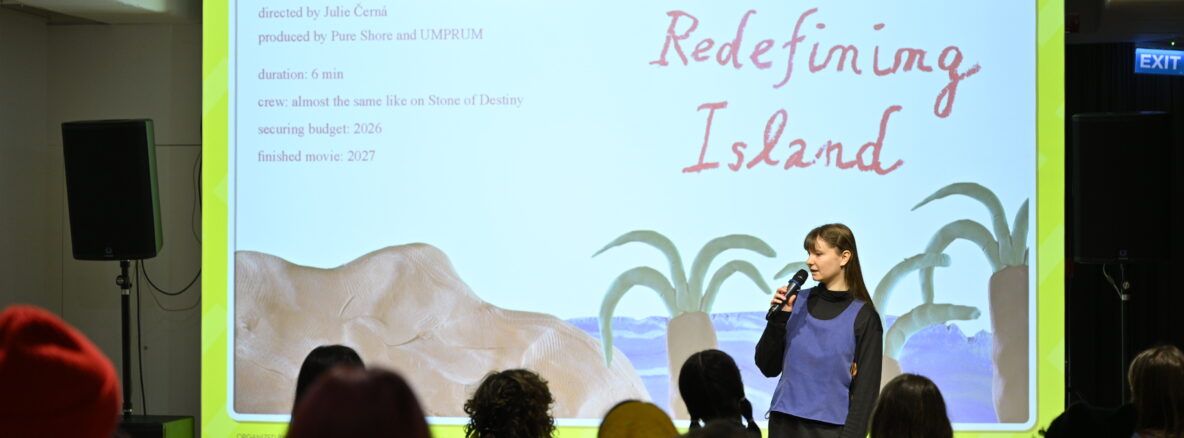
We want to continue doing what we’ve been doing so far, as not much has changed regarding gender imbalance. At the same time, we aim to improve the workshop every year. That’s why we place strong emphasis on participant evaluations. Based on feedback, we have recently introduced screenings where participants share their previous work – short films, commercial projects, or personal pieces – which helps everyone get to know each other better. Since 2024, we have also started organizing informal meetings with alumni as part of the workshop. We are always trying to respond to participant feedback.
And from your personal perspective, what has been the most rewarding outcome of organizing SYAA?
For me, the greatest joy is seeing our alumni remain active in the animation scene. Ideally as directors or writers of their own projects. Being able to support and encourage their creative growth and inspire them to keep working, that is the biggest reward. Seeing them succeed in the industry is what matters most.
By Eliška Děcká and Helga Fodorean